


Best Time Management Tips for Students. Managing time effectively is one of the most valuable skills every student can develop. Whether you’re in high school, college, or university, balancing classes, homework, exams, extracurricular activities, and personal life can feel overwhelming. Without proper planning, students often experience stress, missed deadlines, and poor academic performance.
The good news is that time management tips for students are simple to learn and can dramatically improve productivity. By creating better study habits, organizing daily tasks, and eliminating distractions, students can accomplish more in less time while maintaining a healthy work-life balance.
Why Time Management Is Important for Students
Good time management helps students complete assignments on schedule, prepare effectively for exams, and reduce unnecessary stress. Instead of rushing to finish work at the last minute, students who manage their time wisely enjoy better academic performance and greater confidence.
Developing strong study habits, improving student productivity, and following a structured routine also leave enough time for hobbies, exercise, and relaxation. Learning this skill early benefits students throughout their careers and personal lives.
Set Clear Academic Goals
Before managing your time, you need to know what you’re working toward. Setting realistic academic goals provides direction and motivation.
Break large objectives into smaller, achievable tasks. Instead of saying you’ll study all day, decide to complete one chapter, solve practice questions, or review lecture notes. This approach keeps progress measurable and prevents feeling overwhelmed.
Having short-term and long-term goals also helps students prioritize important tasks over less valuable activities.
Create a Daily Study Schedule
A planned schedule removes confusion about what needs to be done each day. Allocate specific hours for attending classes, studying, completing homework, exercising, and relaxing.
Consistency is more important than studying for long hours. Even studying for two focused hours every day is more productive than studying randomly for eight hours before exams. Students who follow a regular schedule develop better discipline and avoid procrastination.
Prioritize Tasks Using the Importance Method
Not every task has the same level of importance. Learning how to prioritize allows students to spend time on activities that have the greatest academic impact. Complete assignments with the nearest deadlines first. Prepare for upcoming exams before working on less urgent projects. By identifying high-priority tasks each morning, students avoid wasting energy on unimportant activities while staying organized throughout the day.
Eliminate Digital Distractions

Smartphones and social media are among the biggest productivity killers for students. Constant notifications interrupt concentration and reduce learning efficiency. During study sessions, switch your phone to silent mode or place it in another room. Using website blockers or focus apps can also help limit distractions from social media platforms while studying. Creating a distraction-free environment allows students to improve concentration and complete work much faster.
Use the Pomodoro Technique
The Pomodoro Technique is a popular productivity strategy that improves focus while preventing mental exhaustion. Study with full concentration for 25 minutes, then take a five-minute break. After completing four study sessions, enjoy a longer break of 20 to 30 minutes. This method helps maintain energy levels, increases information retention, and makes long study sessions feel much easier. Many successful students use this strategy because it encourages consistent learning without burnout.
Stay Organized with Digital or Paper Planners
Organization plays a major role in effective time management. Whether you prefer a notebook, planner, calendar, or digital app, writing down assignments and deadlines ensures nothing is forgotten. Review your schedule every morning and update it whenever new tasks appear. Keeping everything organized reduces stress and makes daily planning much simpler.
Learn to Say No
Many students struggle because they accept every invitation or responsibility. While social activities are important, saying yes to everything often leaves little time for studying. Learning to politely decline unnecessary commitments allows students to protect valuable study time and maintain academic performance. Balance is essential for long-term success.
Develop Healthy Study Habits
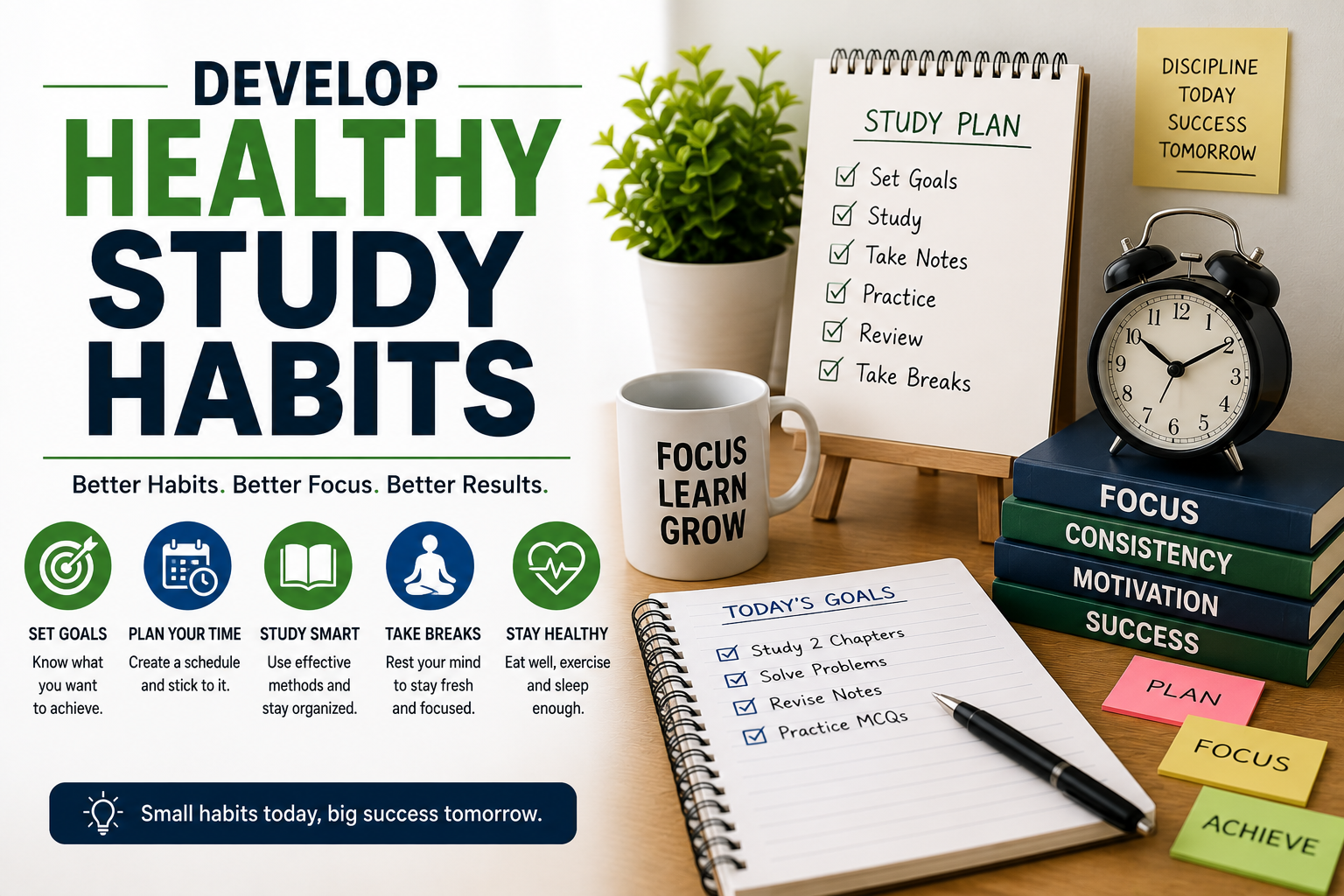
Productivity isn’t only about studying longer—it’s about studying smarter. Choose a quiet study environment with good lighting and minimal distractions. Keep all study materials nearby before beginning your work.
Review notes regularly instead of cramming before exams. Regular revision improves memory retention and reduces exam anxiety. Building healthy study routines, learning strategies, and productive habits creates lasting academic success.
Get Enough Sleep and Exercise
Many students sacrifice sleep believing it increases productivity. In reality, lack of sleep reduces memory, concentration, and decision-making abilities. Aim for seven to nine hours of quality sleep each night. Regular physical activity also improves energy levels, reduces stress, and enhances brain function. Healthy students are naturally more productive than exhausted ones.
Review Your Progress Weekly
Successful students regularly evaluate their progress. At the end of each week, review completed assignments, unfinished tasks, and upcoming deadlines. Ask yourself what worked well and what needs improvement. Making small adjustments every week helps develop stronger time management skills, improves efficiency, and prevents repeated mistakes.
Conclusion
Effective planning, clear goal setting, organized study schedules, and healthy habits not only improve grades but also reduce stress and increase confidence.
Remember that productivity isn’t about studying for endless hours. It’s about making every study session meaningful. By applying these proven strategies consistently, students can achieve academic success while maintaining a balanced and enjoyable lifestyle.
Frequently Asked Questions (FAQs)
1. What is the best time management technique for students?
The Pomodoro Technique is one of the most effective methods because it combines focused study sessions with regular breaks, helping students stay productive without feeling overwhelmed.
2. How many hours should students study each day?
Most students benefit from studying between two and four focused hours daily, depending on their academic level, coursework, and upcoming exams.
3. How can students avoid procrastination?
Breaking large tasks into smaller goals, following a daily schedule, removing distractions, and rewarding progress are effective ways to overcome procrastination.
4. Why is time management important for academic success?
Good time management helps students meet deadlines, improve focus, reduce stress, achieve better grades, and maintain a healthy balance between studies and personal life.
5. Which apps help students manage time effectively?
Popular productivity apps include Google Calendar, Microsoft To Do, Notion, Todoist, Trello, and Forest. These tools help students organize schedules, track assignments, and stay focused during study sessions.
Read more: Best AI Productivity Apps in 2026: Boost Efficiency

1 Comment
Pingback: How to avoid procrastination while studying