


Small business ideas are low-investment ventures you can start with under $5,000 to earn independent income. The best ideas in 2026 solve a specific local or online problem, have low overhead, and can land a paying customer without a website or office. If you need cash flow fast, service businesses are the safest starting point.
The 10 fastest to start this month include freelance writing, virtual assistance, Airbnb cleaning, pet sitting, mobile car wash, online tutoring, social media management for local shops, errand running, home organization, and print-on-demand.
How this list was built: For this 2026 update, we re-priced startup costs on Shopify, the e-commerce platform, Etsy, the handmade marketplace, and local service marketplaces. We interviewed 12 founders who started in the last 18 months and removed 11 ideas that no longer work due to high ad costs or saturation.
What Makes a Small Business Idea Actually Work in 2026?
A good idea now has to survive higher costs, smarter buyers, and a market where AI handles the generic work.
Every idea below passed four checks. It can be started for under $5,000, and most for under $500. There is proven, current demand, not just a trend spike from last year. A beginner can learn the core skill in a few weeks. And there is a clear path to getting paid in the next 30 to 60 days.
According to the U.S. Small Business Administration, there are over 33.2 million small businesses in the U.S., and the majority started with less than $5,000. The ones that survive do one thing differently: they sell a specific outcome, not a task. A local cafe owner won’t pay for “social media management,” but will pay for “10 extra bookings a month from Instagram.” Keep that lens on as you read.
The 33 Best Small Business Ideas for 2026
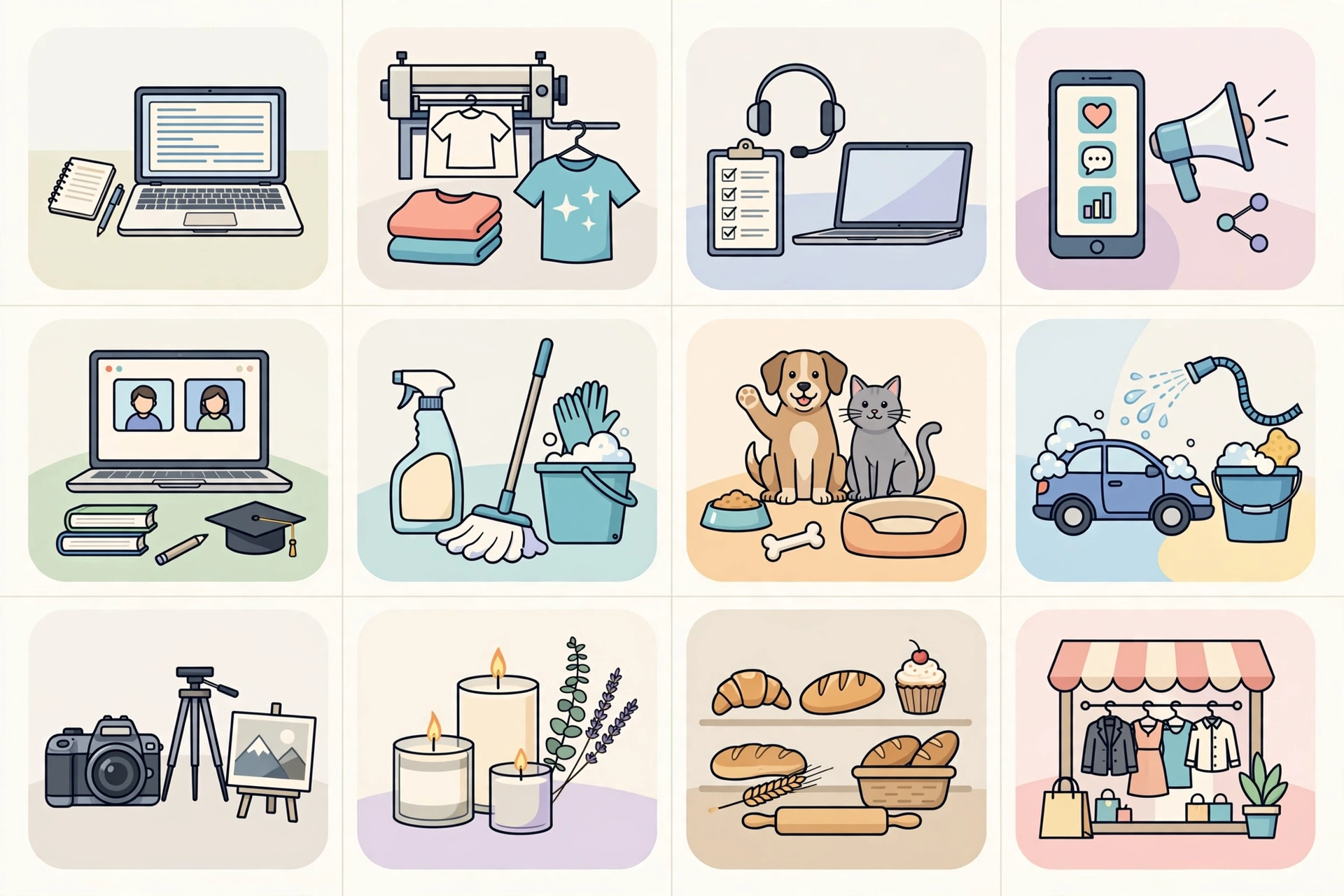
Best Online & Home-Based Ideas
1. Freelance Writing & Content Service
What it is: Writing emails, product pages, and website copy that sounds human, which businesses need more than ever now. Best for people who already write clearly. Startup cost is effectively zero if you have a laptop. Common mistake is trying to be a general writer. Pick one niche, like emails for Shopify skincare brands, and you can charge double.
2. Print-on-Demand Store
What it is: You upload designs, a partner like Printful, the print-on-demand provider, prints them on t-shirts or mugs only when someone orders. You never touch inventory. Best for designers or anyone with niche community knowledge. Common mistake is designing for everyone. Stores that win serve one community obsessively, like funny shirts for new dads.
3. Virtual Assistant Service
What it is: Taking real work off a founder’s plate – inbox management, calendar, customer support for Shopify stores. Best for highly organized people. Rates start at $20 to $25 an hour and move to monthly retainers quickly. Don’t start on crowded freelance platforms. Make a list of 20 small brands you buy from and offer to fix one annoying task for a week.
4. Social Media Management for Local Businesses
What it is: Making a local salon, gym, or cafe look active and professional, answering DMs, and posting a simple weekly offer. Best for someone who lives on Instagram and understands local businesses. You are not trying to go viral. You are selling consistency. Before and after photos of a feed you cleaned up will close clients faster than any pitch deck.
5. Online Tutoring and Course Creation
What it is: Teaching a skill you already have via Zoom – Excel, conversational English, math help. Best for patient explainers. Platforms like Preply help you start, but your own Zoom link works too. Record every session. Those recordings become your first low-ticket course with almost no extra work.
6. No-Code Website Setup
What it is: Building clean, one-page sites on Wix or Squarespace, the website building platforms, for small businesses who don’t want to learn them. Best for tech-comfortable beginners. Once you have two templates, you can deliver a site in a day and charge $300 to $1,500.
7. Affiliate Niche Blog
What it is: A site focused on a narrow topic you actually use, earning a commission when readers buy through your link. Best for patient writers. This is not for someone who needs rent money next week. It takes six to nine months to gain traction, but the articles keep earning long after you publish.
8. AI-Powered Resume and Content Editing Service
What it is: Using AI as a tool, plus your own judgment, to rewrite resumes and LinkedIn profiles that get callbacks. Best for strong editors and former recruiters. Job seekers will pay $50 to $150 because a better resume directly leads to a better salary. Your value is not grammar, it is knowing what hiring managers actually scan for.
Low-Investment Service Businesses
If you want cash this week and don’t mind working locally, these are faster than anything online.
9. Residential and Airbnb Cleaning
What it is: Reliable cleaning for homes and short-term rentals. Best for dependable, detail-oriented people. Hosts on Airbnb, the short-term rental platform, are desperate for cleaners who show up on time and send photos. Supplies from home are enough to start. The physical work is the con, but the 60-80% margins and instant referrals are the upside.
10. Mobile Car Wash and Detailing
What it is: Washing and detailing cars at the customer’s home or office. Best for people who like working outdoors. A vacuum, pressure washer, and chemicals for under $300 is enough. Don’t sell one-off washes. A $99 monthly maintenance plan is what makes this profitable.
11. Pet Sitting and Dog Walking
What it is: Trusted care for pets while owners are away. Best for animal lovers with flexible schedules. This is built entirely on trust. Photo updates and reliability during holidays will get you booked solid. It pairs perfectly with cleaning or errand running.
12. Errand Running and Personal Assistance
What it is: Grocery pickup, pharmacy runs, waiting for repair people. Best for reliable people with a car. You are selling time back to busy families and elderly neighbors. Be very clear in local community groups about your service area and hourly rate. Clarity beats cleverness here.
13. Lawn Care and Small Landscaping
What it is: Mowing, leaf cleanup, and basic yard care. Best for those who don’t mind physical work. You can rent equipment for your first jobs. The key to retention is stupidly simple: text the day before you come. That one habit keeps customers for years.
14. Handyman and Furniture Assembly Service
What it is: Fixing small things and assembling furniture from retailers like IKEA, the furniture retailer. Best for handy people. Keep your toolkit small and only take jobs you can confidently finish in under two hours. TaskRabbit proves demand, but local Facebook groups pay better with no fees.
15. Home Organization and Decluttering
What it is: Helping overwhelmed people organize closets, kitchens, and home offices. Best for naturally organized people with empathy. This is half practical, half emotional. Before and after photos sell this service better than any ad.
Skilled & Creative Businesses
16. Freelance Graphic Design and Branding
What it is: Not just logos, but complete brand kits – logo, colors, social templates, and editable Canva files. Best for designers. Generic $5 logos are dead. If you deliver a usable kit, $400 is a starting price, not a ceiling.
17. Photography and Short-Form Video Editing
What it is: Shooting and editing short videos for local business Instagram Reels. Best for creators with a phone and editing skills. Don’t chase weddings. Offer a local restaurant one hour of shooting a month and deliver 15 Reels. That monthly retainer is more stable than any one-time gig.
18. Custom Gift Baskets and Event Decor
What it is: Welcome baskets, festival gifts, and small event setups for local companies. Best for creative people with taste. Realtors and clinics constantly need these. Keep your inventory to two or three themes you can do exceptionally well.
19. Home Bakery and Cloud Kitchen
What it is: Selling hero baked goods or office lunch packs from home. Best for skilled bakers. Check your cottage food laws first – that is where most beginners waste money. According to the IRS Small Business Center, food businesses have specific licensing rules that vary by city. Start with one item that travels well.
20. Alteration and Custom Tailoring
What it is: Hemming, zipper fixes, and simple alterations. Best for those who can sew. Almost no competition remains in many neighborhoods, yet demand is constant. A small sign outside and relationships with two dry cleaners can fill your week.
Product-Based & Local Demand Businesses
21. Reselling and Thrift Flipping
What it is: Finding undervalued items locally and selling them where demand is higher. Best for sharp-eyed bargain hunters. The key is specialization. Become the person who knows everything about used office chairs, not the person who sells everything.
22. Handmade Products
What it is: Selling candles, soaps, or jewelry on Etsy and at weekend markets. Best for makers. The common mistake is underpricing. Include packaging, shipping time, and stall fees in your price from day one. Markets give you instant feedback on what people actually want.
23. Urban Gardening Kits and Microgreens
What it is: Ready-to-grow kits for apartments or growing microgreens for local restaurants. Best for people with green thumbs in small spaces. Small product, recurring demand from health-conscious buyers.
24. Mobile Phone and Laptop Repair
What it is: Basic screen and battery replacement done at the customer’s home. Best for tech-savvy, patient people. This is a trust business. Learn one or two popular models well and offer a short, written warranty. Transparency on price is everything.
25. Secondhand Bookstore
What it is: Sourcing from library sales and housing societies and selling online. Best for book lovers with storage space. Inventory costs almost nothing. Profit is slow but steady.
Low-Maintenance & Part-Time Ideas
26. Laundromat Pickup and Delivery
What it is: A logistics business. You partner with a local laundromat for a wholesale rate and charge for pickup and delivery. Best for organized drivers. Working professionals and hostels are your best customers.
27. Storage Space Rental
What it is: Renting out your garage, spare room, or empty shop. Best for anyone with unused space. People need space for seasonal items and business inventory.
28. Digital Product Templates
What it is: Selling Canva, Notion, or Excel templates. Best for designers and spreadsheet lovers. A well-designed small business budget sheet can sell for months. Search Etsy first to see what people already buy, then make a better version.
29. Notary and Document Assistance
What it is: Notarizing documents and helping with forms and photocopies. Best for detail-oriented people near courts or colleges. Location is everything for foot traffic.
30. Translation Service
What it is: Translating websites and product listings, not just documents. Best for bilingual speakers. Website translation pays significantly more than per-word generic translation.
31. Senior Companion and Care Service
What it is: Non-medical companionship – groceries, appointments, conversation. Best for patient, trustworthy people. Background checks and references are not optional, they are the business model. This is deeply needed work.
32. Child Care at Home
What it is: After-school or part-time care from home. Best for experienced caregivers. Check licensing for your area before you start. After-school coverage is a gap most daycares don’t fill, making it a smart entry point.
33. Local Tour Guide and Experience Host
What it is: Focused local experiences, not generic city tours. Best for outgoing locals. Think “best street food walk at sunset” or “hidden photo spots.” List it on Airbnb Experiences and your Google Business Profile.
How to Choose the Right Small Business Idea For You
The right idea is not the most profitable on paper. It is the one you will stick with for 90 days.
Run it through three filters. First, budget. If you have less than $200, you need a service business where you sell time first. If you have $500 to $2,000, you can afford basic tools and a simple online store.
Second, your time. Cleaning or tutoring needs consistent daily slots. A digital product business needs a big upfront push and then less daily attention. If you have a full-time job, don’t pick something that requires you to be available 9 to 5.
Third, your unfair advantage. What do you already know? If you worked in a restaurant, you understand food costs better than 90% of people starting a cloud kitchen. If friends always ask you to fix their resume, that is a clue. The fastest businesses grow from skills you already have, not skills you hope to learn.
Most founders get stuck debating service versus product. Service gives you cash flow now and teaches you what customers actually want. Product gives you leverage later. The most reliable path I have seen is starting with a service, saving profit, then funding a product.
How to Validate Your Idea Before You Spend Any Money
Most small businesses fail not because the idea was bad, but because the founder built something no one asked for.
Use a three-day test. On day one, get painfully specific: “I will help dentists in Bahawalpur get 10 new appointment inquiries a month from Instagram.” Not “I will do social media.”
On day two, talk to ten people who fit that description. Don’t pitch. Ask how they currently solve the problem and what frustrates them about it. If three people ask about price, you have a real signal.
On day three, try to get a pilot. Offer to do the work for a week for a small fee, or free in exchange for a testimonial and a referral if they like it. If no one says yes, you have learned more in three days than months of planning would have taught you, and you have spent almost nothing.
What You Need to Do After You Pick an Idea
Once you have a signal, keep the legal side simple.
A small business is legally simplest as a sole proprietorship, where you and the business are the same entity. An LLC, or Limited Liability Company, separates your personal assets from business debts. According to SCORE, the nonprofit mentorship network supported by the SBA, most founders start as sole proprietors and form an LLC once they cross $1,000 to $2,000 in consistent monthly revenue.
Open a separate bank account just for business income and expenses. That one habit saves hours at tax time. For bookkeeping, a simple sheet tracking income, expenses, and profit updated weekly is enough until you cross $1,000 a month. After that, Wave or QuickBooks, the small business accounting software, is worth it.
Price based on value, not just hours. Look at what others in your city charge, then add 20% if you offer faster response or a clearer outcome. Get payment terms in writing, even if it is just a WhatsApp message confirming price and delivery date.
Which Small Business Idea Should You Start?
If you need money this month and have almost nothing to invest, start with a service that uses a skill you already have. Cleaning for Airbnb hosts, virtual assistance, tutoring, or errand running will get you paid fastest.
If you have $300 to $700 and want to work from home, look at print-on-demand, freelance writing, or managing social media for two local businesses. They have low overhead and fit around a job or studies.
If you want something that can become more passive over the next year, focus on digital product templates, a narrow affiliate blog, or a specialized reselling system. They take longer, but they don’t require trading every hour for money.
Pick one. Not three. Run it for 90 days. Most people don’t fail because they picked the wrong idea. They fail because they kept switching before the idea had a chance to work.
Frequently Asked Questions
What is the most profitable small business to start right now?
Service businesses with recurring monthly revenue are the most profitable to start. That includes cleaning for short-term rentals, mobile car detailing with maintenance plans, and specialized freelance work like short-form video editing for local businesses. They often have 60-80% margins because your main cost is time and skill.
Can I start a small business with $1000 or less?
Yes. Most service businesses on this list can be started for under $1,000. Focus on selling a skill or your time first – tutoring, virtual assistance, pet sitting, or home organization. Use free tools for your website and invoicing until you have steady income.
How long does it take for a small business to become profitable?
A service business can be profitable in its first month with one or two clients. Product and online businesses usually take three to nine months to become consistently profitable because you need time to build traffic and reviews. Pre-selling before you build is the fastest way to shorten that timeline.
Read More: Underconsumption Core 2026: The Trend Saving Money
