

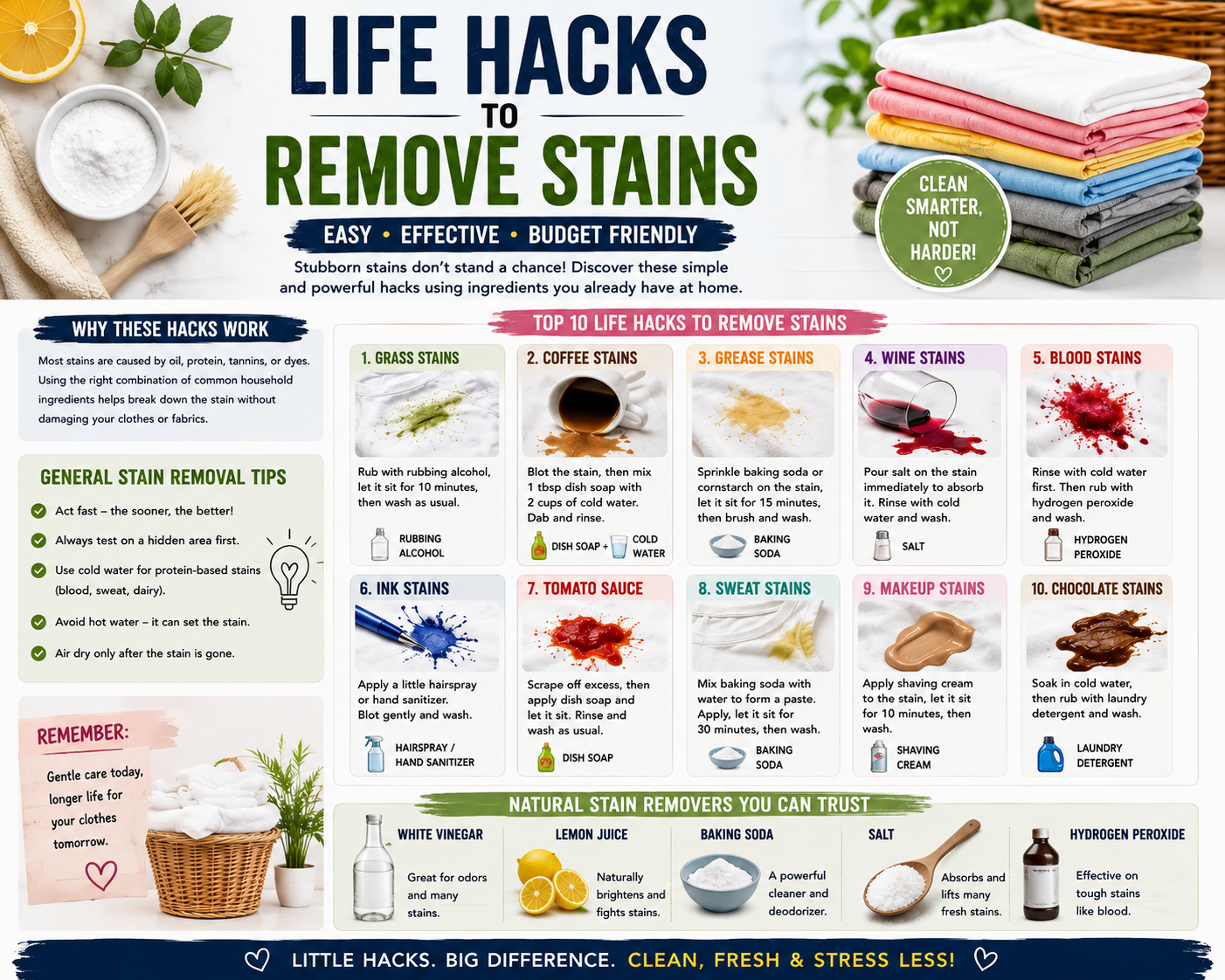
Stains are an unavoidable part of everyday life. Whether it’s coffee spilled on your favorite shirt, grease splattered on kitchen towels, ink on school uniforms, or red wine on the carpet, stubborn stains can be frustrating to remove. Fortunately, you don’t always need expensive commercial cleaners to restore your belongings. Many effective stain-removal solutions can be created using simple household ingredients that are already in your kitchen or laundry room.
These Life Hacks to Remove Stains are designed to help you tackle common stains quickly, safely, and efficiently. By understanding the type of stain you’re dealing with and using the right cleaning method, you can protect your clothes, furniture, and household fabrics from permanent damage. From natural remedies to proven cleaning techniques, this guide covers everything you need to know to keep your home looking fresh and spotless.
Why Acting Quickly Makes a Difference
The sooner you treat a stain, the easier it is to remove. Fresh stains usually remain on the surface of the fabric, making them much easier to lift before they penetrate deep into the fibers.
Allowing stains to dry gives oils, pigments, and proteins more time to bond with the material, often requiring stronger cleaning products later. Immediate treatment using quick stain removal, fabric care, and household cleaning tips can significantly improve your results while protecting delicate fabrics.
Different Types of Stains
Not every stain should be treated the same way. Different substances require different cleaning techniques to prevent setting the stain even deeper.
Oil-based stains like cooking oil or butter respond best to dish soap because it breaks down grease effectively. Protein stains such as blood, milk, and sweat should always be treated with cold water since hot water can permanently set them. Colored beverages like coffee, tea, and wine often require gentle acidic cleaners to lift discoloration without damaging the fabric.
Knowing the source of the stain is the first step toward successful cleaning.
Everyday Household Ingredients That Remove Stains
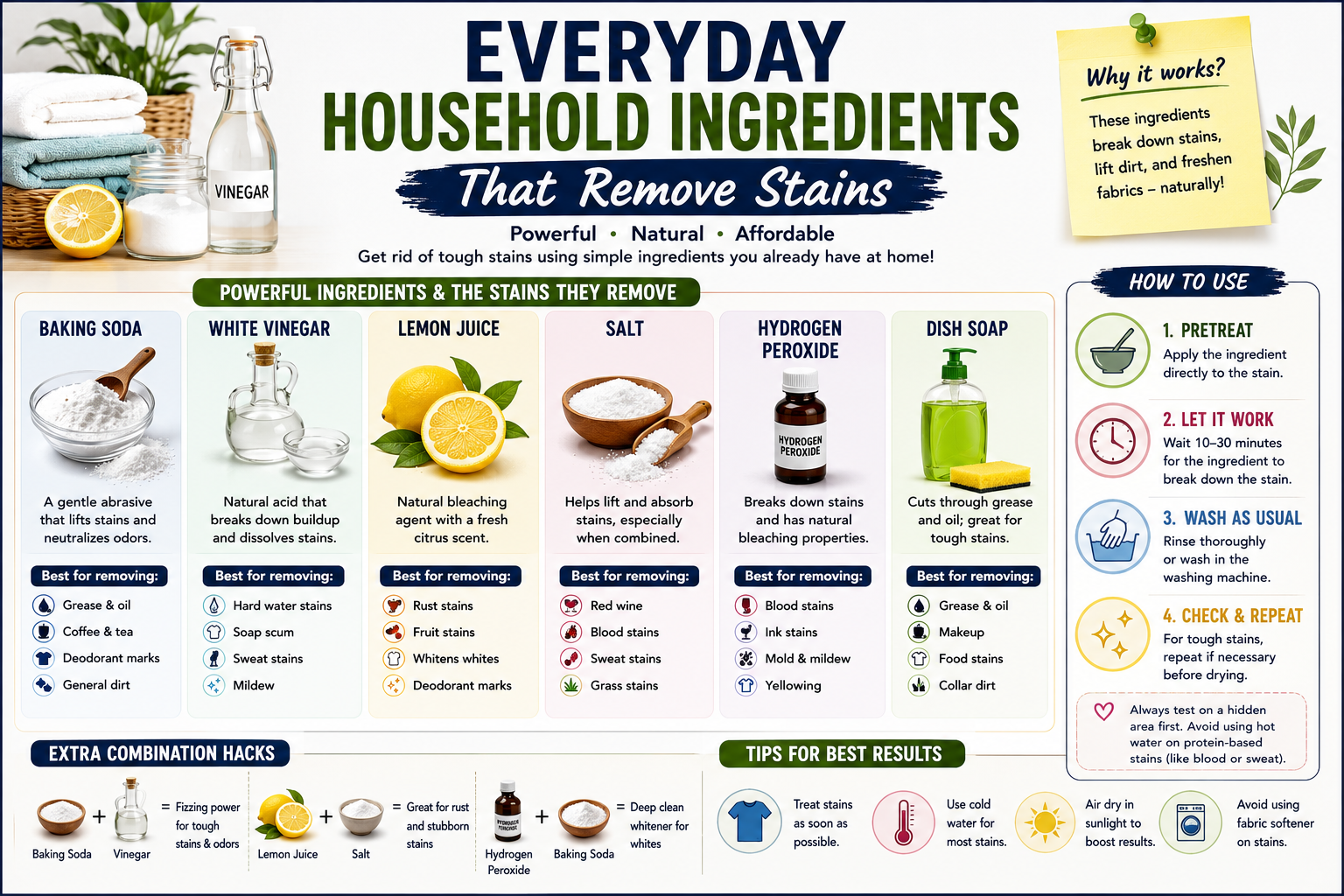
Many common household products work surprisingly well as natural stain removers.
Baking Soda
Baking soda is one of the most versatile cleaning products available. It absorbs odors, lifts stains, and gently scrubs delicate fabrics without causing damage. Mixing baking soda with a small amount of water creates a paste that works well on food, sweat, and grease stains.
White Vinegar
White vinegar helps dissolve mineral deposits, deodorize fabrics, and brighten dull clothing. Combined with water, it works especially well for coffee stains, sweat marks, and general fabric refreshment.
Dish Soap
A few drops of dish soap can effectively remove grease, butter, cooking oil, and makeup stains because it cuts through oils without being overly harsh on most fabrics.
Lemon Juice
Natural acids found in lemon juice help lighten stubborn stains while leaving fabrics smelling fresh. It works particularly well on white clothing and light-colored fabrics.
How to Remove Common Clothing Stains
Coffee and Tea Stains
Blot the spill immediately using a clean cloth. Rinse the stained area with cold water before applying a mixture of liquid detergent and white vinegar. Allow it to sit for several minutes before washing normally.
Grease and Oil Stains
Sprinkle baking soda over the stain to absorb excess oil. After fifteen minutes, brush away the powder and apply dish soap directly to the fabric. Rub gently before laundering as usual.
Ink Stains
Place a clean towel underneath the stained area before applying rubbing alcohol with a cotton ball. Gently blot the stain until the ink begins transferring to the towel. Wash immediately afterward.
Blood Stains
Always rinse blood stains using cold water. Apply a small amount of hydrogen peroxide or mild laundry detergent before gently rubbing the fabric. Never use hot water because it can permanently set protein stains.
Using these clothing stain removal tips helps preserve your favorite garments while extending their lifespan.
Cleaning Carpet and Upholstery Stains
Carpets and upholstered furniture require extra care because excessive moisture can damage the material underneath.
Begin by blotting liquid spills rather than rubbing them, which spreads the stain deeper into the fibers. A solution made from warm water, white vinegar, and a few drops of dish soap can effectively remove many food and beverage stains.
Allow the area to dry completely before vacuuming to restore the carpet’s texture and appearance.
Kitchen Cleaning Hacks for Tough Stains
The kitchen experiences some of the toughest stains due to constant cooking and food preparation.
Grease splatters on countertops, baked-on food in cookware, and stubborn stains inside microwaves can often be removed using baking soda and warm water. For microwave stains, heat a bowl of water mixed with lemon slices for several minutes. The steam loosens dried food, making it much easier to wipe away.
These kitchen cleaning hacks save time while reducing the need for harsh chemical cleaners.
Laundry Tips to Prevent Permanent Stains
Preventing stains is often easier than removing them.
Always check clothing labels before washing. Separate white clothes from colored fabrics to prevent dye transfer. Avoid placing stained garments in the dryer until the stain has completely disappeared because heat can permanently set remaining discoloration.
Using quality laundry detergent and treating stains before washing greatly improves cleaning performance while protecting fabric quality.
Natural Stain Removal vs. Commercial Cleaners
Natural cleaning solutions are affordable, environmentally friendly, and safe for most everyday stains. Ingredients like baking soda, vinegar, and lemon juice are widely available and gentle enough for regular use.
Commercial stain removers, however, may provide faster results on older or heavily set stains because they contain specialized cleaning agents. The best approach often combines natural remedies for routine cleaning and commercial products only when necessary.
Choosing the right method depends on the stain type, fabric, and severity.
Common Stain Removal Mistakes to Avoid
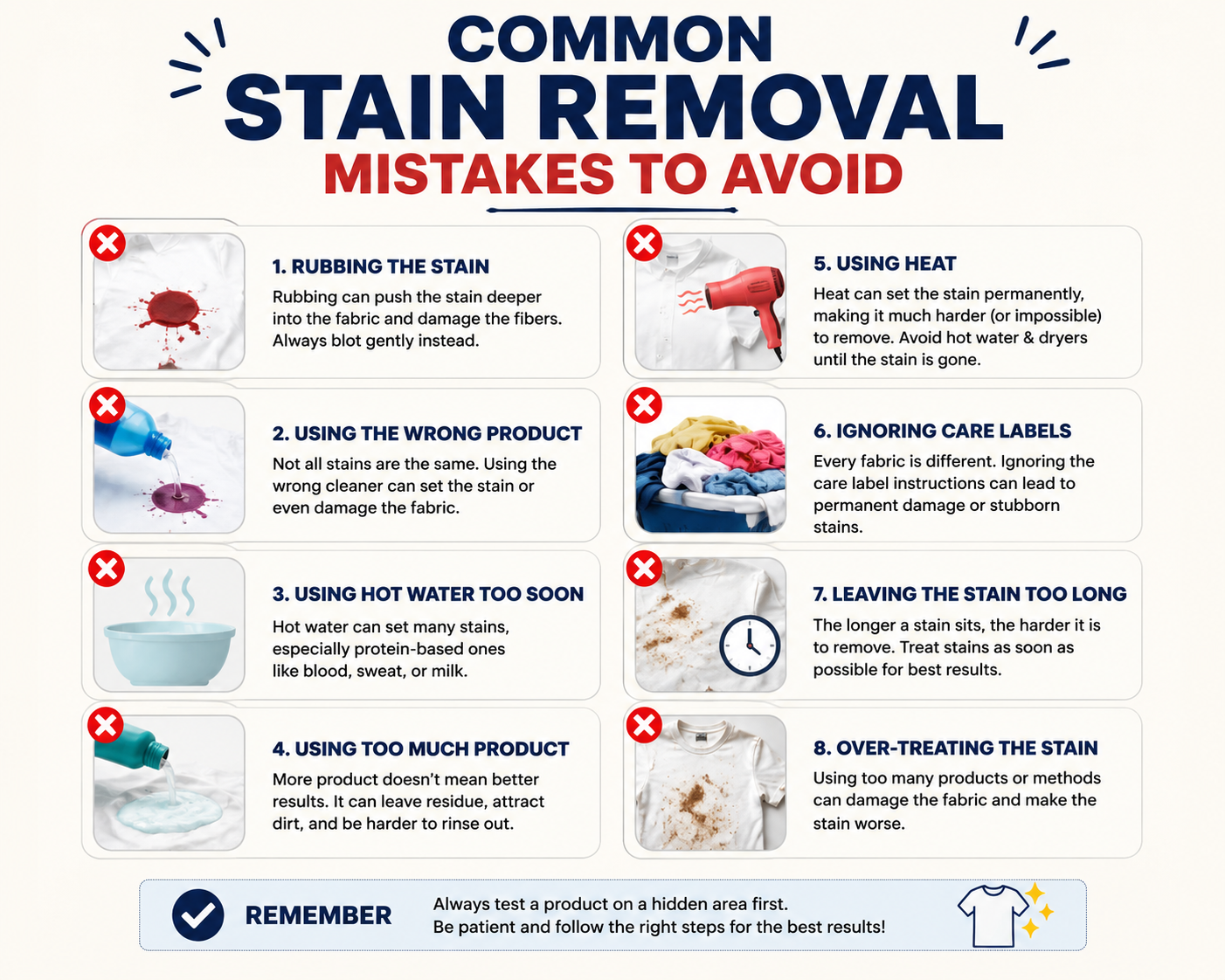
One of the biggest mistakes people make is rubbing a stain aggressively. This often pushes the stain deeper into the fibers instead of removing it.
Another common error is using hot water on protein-based stains such as blood, milk, or eggs. Hot water causes these stains to bond permanently with the fabric.
Mixing multiple chemical cleaners can also be dangerous and may damage fabrics or create harmful fumes. Always test any cleaning solution on a hidden area before treating visible stains.
Finally, avoid drying stained clothing until you’re certain the stain has been completely removed.
Conclusion
Using these Life Hacks to Remove Stains can help you tackle everyday spills quickly, safely, and effectively without relying on expensive cleaning products. Whether you’re dealing with coffee, grease, ink, blood, or food stains, understanding the correct cleaning method makes a significant difference. With simple household ingredients like baking soda, vinegar, dish soap, and lemon juice, you can restore clothes, carpets, and furniture while saving both time and money. By treating stains promptly and avoiding common cleaning mistakes, you’ll keep your home cleaner, your fabrics looking newer, and your favorite items lasting much longer.
Frequently Asked Questions
1. What is the best homemade stain remover?
A mixture of baking soda, white vinegar, and a small amount of dish soap works well for many common household and clothing stains.
2. Should I use hot or cold water to remove stains?
Cold water is generally safer for most fresh stains, especially blood, milk, and other protein-based stains. Hot water may permanently set these stains.
3. Can baking soda remove old stains?
Yes. Baking soda can help lift many older stains, especially when mixed into a paste and allowed to sit before washing.
4. How can I remove grease stains from clothes?
Apply baking soda to absorb excess oil, brush it away after several minutes, then treat the stain with dish soap before washing.
5. Are natural stain removers as effective as commercial products?
Natural stain removers are highly effective for most fresh and everyday stains. Commercial cleaners may perform better on older, deeply set, or specialized stains, but natural solutions are often safer, more affordable, and environmentally friendly.
