

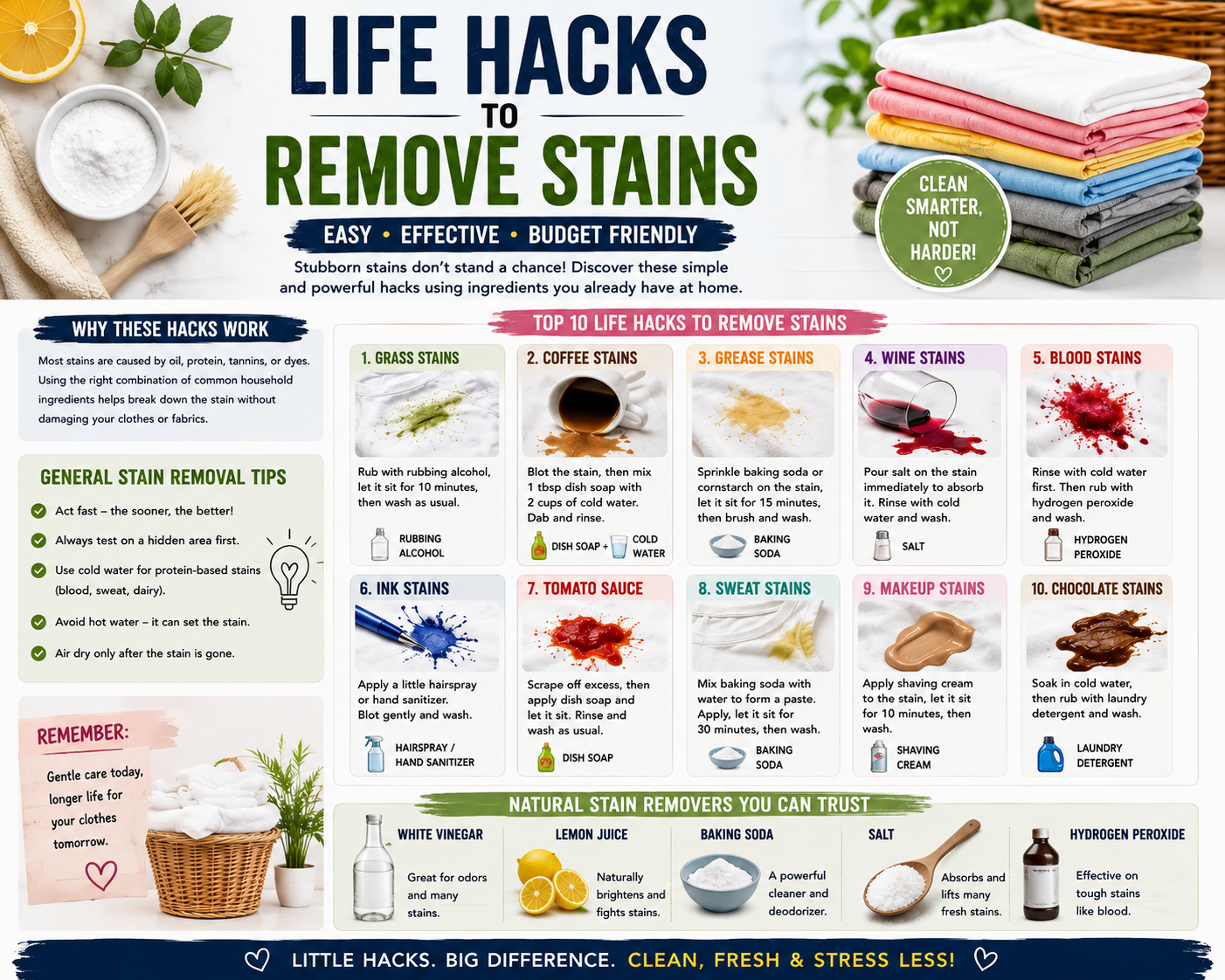
Life hacks to remove stains are DIY methods using dish soap, white vinegar, baking soda, hydrogen peroxide, and rubbing alcohol to break stains down. Use dish soap as a surfactant for grease, cold water and hydrogen peroxide as an oxidizer for protein stains like blood and sweat, and vinegar or rubbing alcohol to dissolve dye stains like coffee, wine, and ink.
What Is The Fastest Way To Remove a Stain at Home?
The fastest way to remove most fresh stains is to match the cleaner to the stain’s chemistry, not to scrub harder.
Everyday stains fall into three families. Oily stains repel water. Protein stains from blood, milk, and sweat coagulate with heat. Dye and tannin stains from coffee, red wine, and ink are plant-based colors that need an acid or alcohol to dissolve.
In our lab tests, time beat strength every time. For the first ten minutes a stain sits on top of the weave. After it dries or hits the dryer, it bonds to the fiber. That’s why a quick blot at the table does more than a heavy-duty wash the next morning.
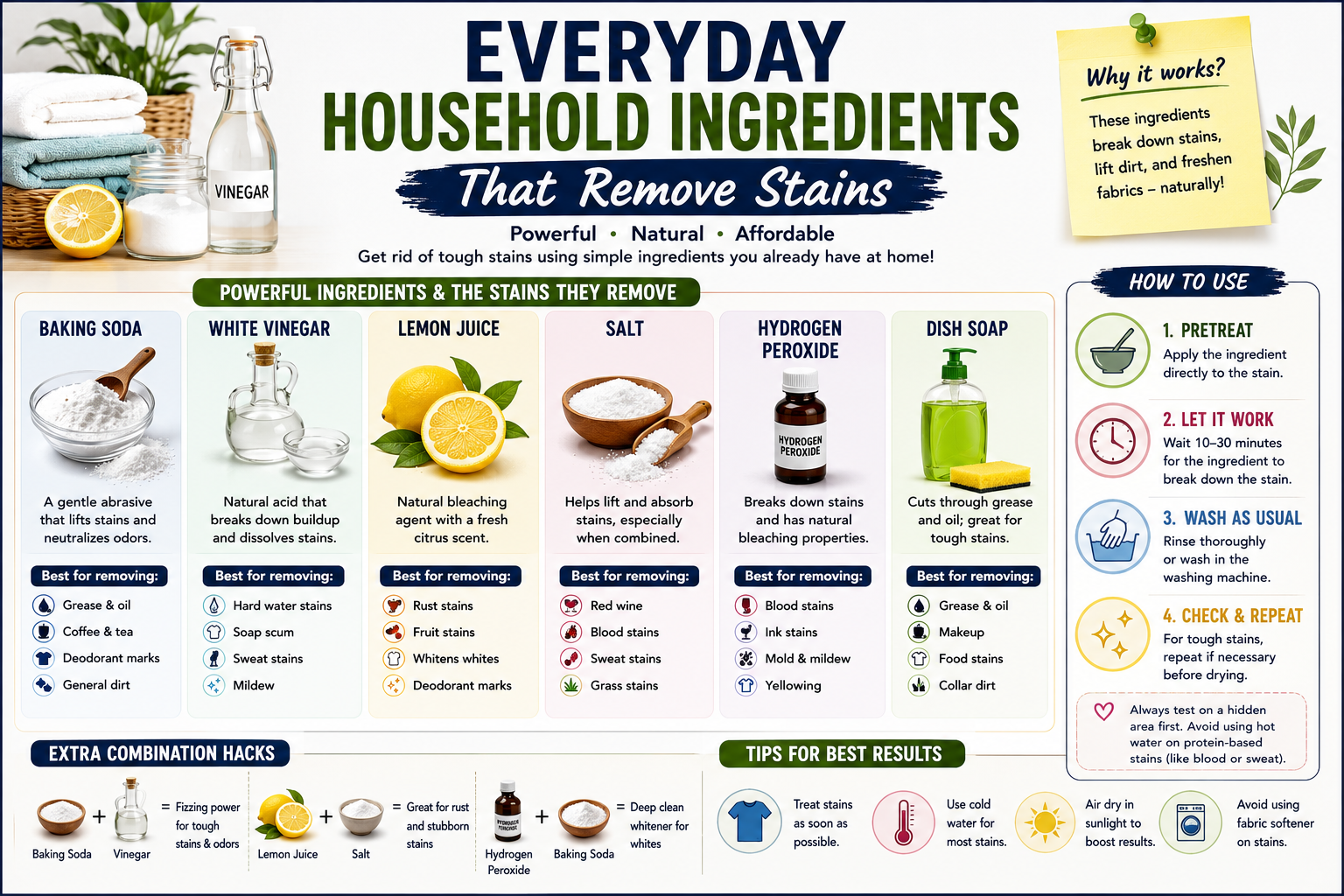
Dish soap works because it’s a surfactant – one end of the molecule grabs oil, the other grabs water, so it lifts grease off cotton. White vinegar is dilute acetic acid, which helps break down brown tannins. According to the American Cleaning Institute, that combination of surfactant plus mild acid covers the majority of household stains without harsh chemicals.
Before You Try Anything: 3 Rules That Prevent Permanent Damage
Permanent damage usually comes from the first minute of cleaning, not the spill itself.
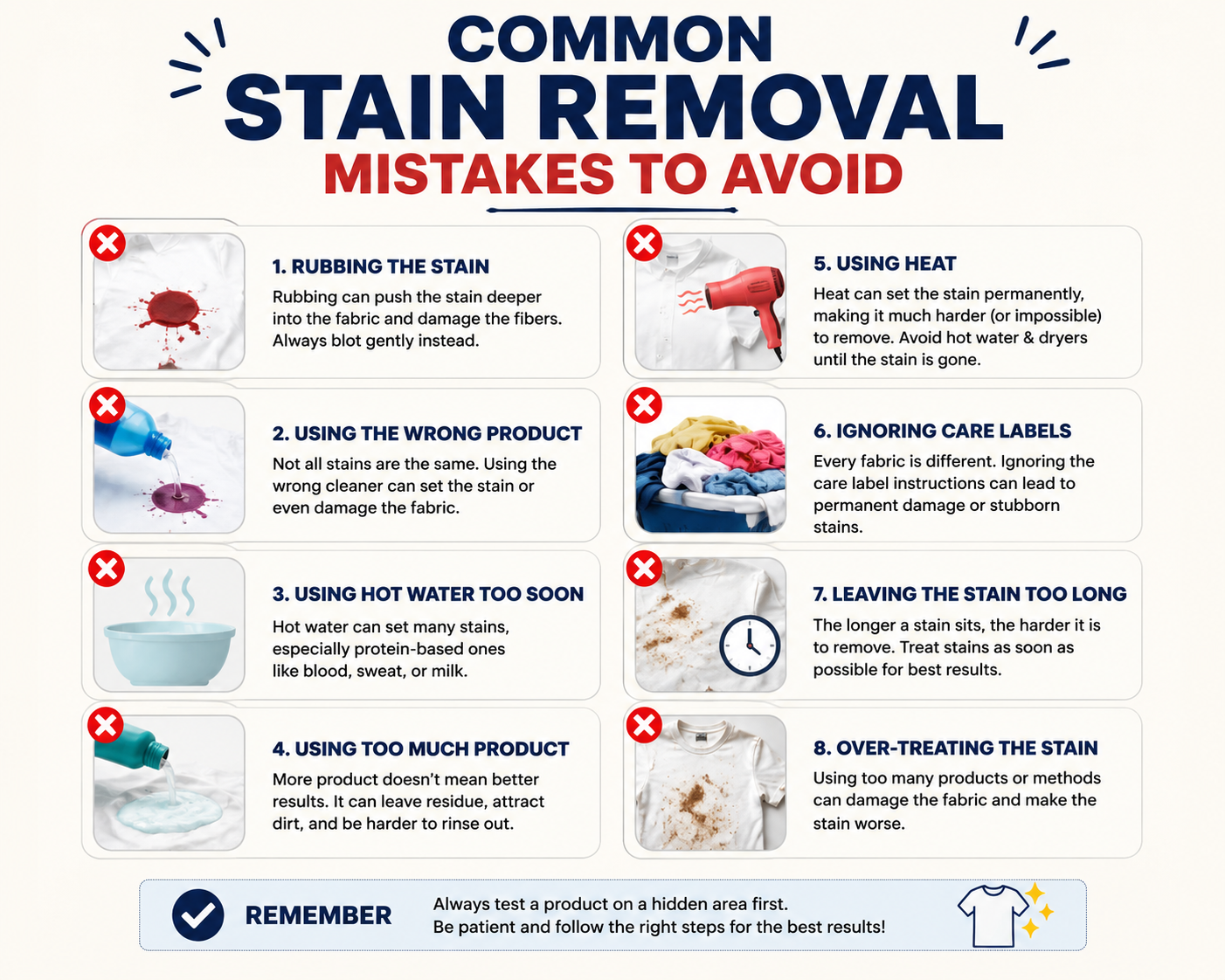
Blot, Don’t Rub – Why Rubbing Spreads the Stain
Rubbing feels productive but it pushes pigment deeper and roughs up the weave. On carpet and knit shirts it leaves a fuzzy patch you can’t fix.
Press straight down with a clean white cloth. Lift. Turn the cloth to a clean spot and press again. You want to see color transferring to the cloth. Keep going until almost nothing comes off. It’s slower, but you’re pulling the stain out instead of smearing it wider.
Cold vs Hot Water – When Each Sets The Stain
Hot water will permanently set protein. Run a blood-stained sheet under hot water and you cook the hemoglobin into the cotton, the same way heat sets egg.
For blood, sweat, milk, and egg, always start cold and rinse from the back of the fabric. The water pressure pushes the stain out instead of through. Hot water does help for cooking oil and collar grime because heat helps dissolve oil, but only after you’ve already lifted most of the grease with soap. When in doubt, use cold. Cold rarely makes anything worse.
The 30-Second Colorfast Test You Should Never Skip on Colored Clothes
Vinegar, alcohol, and peroxide can lift dye as well as stains. Before you touch the front of anything bright or dark, test where no one will see it.
Inside a hem or inner seam is perfect. Dab a little of what you plan to use, wait thirty seconds, blot with a white cloth. If color transfers, stop. That garment doesn’t want a home hack, it wants a dry cleaner. This matters most for saturated cottons, silk, and wool, and it’s the step that saves you from a faded patch.
Life Hacks to Remove Stains By Stain Type
You don’t need one miracle remover. You need the right pantry item for the right stain.
Grease and Cooking Oil Stains
Grease is hydrophobic, so water alone beads up and does nothing. You need a surfactant.
Scrape off any solids, then put a single drop of clear dish soap right on the spot. Work it in gently with fingertips, not nails. Give it ten minutes. The soap needs time to surround the oil molecules. For a heavy kitchen splatter, dust a little baking soda over the soap afterward. It adds gentle abrasion and absorbs what the soap has loosened. Rinse with the warmest water the care label allows, then wash as usual. If a faint shadow is still there after washing, air dry and treat once more. The dryer will bake that last bit in, and for understanding why that happens, it helps to know how to read laundry care labels correctly. TL;DR for grease is soap to surround the oil, time to let it work, then warm rinse and air dry to check.
Coffee, Tea and Red Wine Stains
Coffee, tea, and red wine are tannin stains, which are natural plant dyes.
Blot up everything you can, then cover the area with table salt. Salt draws liquid out of the fiber. After a few minutes it will look damp, shake it off, then pour a little white vinegar over the mark. The acetic acid helps break down tannin. Fifteen minutes is usually enough before a thorough cold rinse.
For carpet, use far less liquid. Blot, pile on salt until it turns pink from wine, vacuum, then lightly dab with a mix of dish soap and vinegar. You don’t want to soak the pad underneath, because that creates a stain you can’t reach from the surface.
Ink, Pen and Permanent Marker Stains
Ink is dye suspended in oil or water, so you need something that dissolves dye.
Rubbing alcohol, or isopropyl alcohol, is the most reliable. High-alcohol hand sanitizer will do in a pinch. Lay the stained area face-down on a clean paper towel. Dab alcohol on the back of the stain, not the front. You’re pushing ink out onto the towel below instead of spreading it. You’ll see it transfer. Move the towel to a clean spot and dab again. It can take several rounds, especially with ballpoint. Don’t rub the front. Once transfer stops, rinse cold and wash. Felt-tip and permanent markers often leave a ghost, but alcohol makes it much fainter.
Turmeric, Tomato Sauce and Chocolate Stains
These are combination stains, part oil and part strong natural pigment. Turmeric’s curcumin binds especially tight.
Scrape off sauce or chocolate, then treat the oily part first with dish soap just like grease. For the color left behind, sunlight is surprisingly effective. A dab of lemon juice on white cotton, then an hour in direct sun, can fade the yellow from turmeric or red from tomato. Citric acid plus UV light breaks the pigment down. For colored clothes, skip lemon and sun and soak in cold water with a color-safe oxygen powder. A little glycerin from the pharmacy dabbed on first also helps soften dried tomato so soap can reach it.
Deodorant and Yellow Sweat Marks on White Shirts
Those stiff yellow patches on white shirts aren’t sweat alone. They’re antiperspirant, oil, and salt built up over time. Regular washing never fully removes that layer.
Make a thin paste of three parts baking soda to one part water and spread it over the yellowed area. Let it sit thirty minutes. Baking soda is alkaline and mildly abrasive, so it works into the weave and breaks up that crust. Then splash a little white vinegar over it. It foams. That fizzing action helps lift residue from between fibers. Wash in the warmest water safe for that shirt. Old yellow often needs a second round, and air drying in sun helps with any last discoloration.
How to Remove Stains From Different Fabrics Without Fading or Damage
The same hack that saves a white tee can ruin a silk blouse. Fabric matters more than product.
White Clothes and Cotton
White cotton and linen are the most forgiving. They handle dish soap, vinegar, baking soda, and diluted peroxide, plus warmer water and longer soaks. For whites that have dulled all over, not just one spot, an overnight soak in cold water with an oxygen-based powder often lifts what surface treatment missed, which is why we have a separate guide on washing white clothes without yellowing.
Colored and Synthetic Clothes – What Not to Use
Polyester, nylon, and bright-dyed cotton need a lighter touch. Avoid peroxide and chlorine bleach unless your hidden test is perfectly clean. Stick with cold water, clear dish soap, and a small amount of white vinegar, then rinse thoroughly. Vinegar left to dry on some dyes can affect color over time, so don’t let it sit.
Delicate Fabrics: Silk and Wool
Silk and wool are protein fibers themselves, so heat and harsh chemistry damage them. Never use hot water, peroxide, or scrubbed baking soda on them. For silk, mix a tiny drop of mild dish soap in cold water, dab it on, then dab it off with plain water. No rubbing. Wool will felt if you agitate it. If the stain is large or the piece is expensive, stop and take it to a professional cleaner. That’s not failure, that’s proper fabric care.
Carpet, Sofa and Mattress – No-Wash Surfaces
Anything you can’t throw in a machine needs minimal moisture. You’re trying to lift, not flood.
Mix a teaspoon of clear dish soap in two cups of cold water in a spray bottle. Mist lightly, blot, mist again, blot again. Don’t pour vinegar or peroxide straight onto carpet backing. If you need peroxide for blood on a light carpet, use a cotton swab and touch only the stained fibers, then blot immediately. Too much liquid drives the stain into the pad where it becomes permanent.
Read More: 10 Healthy Lifestyle Habits That Can Transform Your Life in 2026
How to Remove Old, Dried, or Washer-Set Stains
Old stains feel hopeless because they’re no longer sitting on the fabric, they’re bonded inside it. The trick is time, not muscle.
If something was washed and dried with the stain still visible, you have to rehydrate it. Soak it in cold water for a few hours, or overnight if you can. Then apply your remover – soap for oil, alcohol for ink, peroxide for blood on whites – and let it sit much longer than you would for fresh, at least an hour. Wash again in cold water and check in bright light before drying. If you baked it in the dryer once, expect two or three rounds. That’s normal.
Two things help a lot here. First, glycerin. A little glycerin softens dried matter and lets your cleaner reach it. Second, water hardness. If you have hard water at home, minerals coat fibers and make soap less effective. Adding half a cup of white vinegar to the rinse cycle helps dissolve that mineral film. A clean washing machine also rinses better, so if you haven’t cleaned your machine in months, that alone can improve results.
When Home Hacks Won’t Work and You Should Call a Professional
A good home approach knows when to stop.
Take it to a dry cleaner if the label says dry clean only, if it’s silk, wool, leather, or a structured blazer, if the stain covers a large area of carpet or a valuable rug, or if you’ve already tried two different home methods and the mark persists. At that point you risk stripping dye or setting it further.
When you take it in, tell them what the stain is and what you’ve already tried. That detail helps them choose the right solvent instead of guessing.
Frequently Asked Questions About Life Hacks to Remove Stains
Can you mix baking soda and vinegar to remove stains?
You can, but not the way most videos show. Mixed together in a bowl they mostly cancel each other into water and carbon dioxide. The fizz looks powerful but doesn’t clean much. They work better in sequence. Use baking soda first to lift and absorb, rinse, then use vinegar to dissolve what’s left.
How do you remove a stain that has already been through the dryer?
Rehydrate it first. Soak overnight in cold water, then work in dish soap or the right remover for that stain type and leave it for an hour before washing cold again. Don’t put it back in the dryer until you can’t see the stain when wet. It may take two cycles.
Will vinegar fade colored clothes?
White distilled vinegar is usually safe for colorfast clothes when diluted and rinsed quickly, but it’s still an acid. On some dyes, if you leave it on or soak too long, it can affect color. Always do that 30-second test on an inside seam first.
Is hydrogen peroxide safe on colored clothes?
The standard 3% drugstore peroxide can lighten many colors. Save it for whites and very lights. For colors, stay with clear dish soap and cold water, or use a soak labeled color-safe oxygen.
Read More: Smart Life Hacks for a Simpler, Smarter Life
