

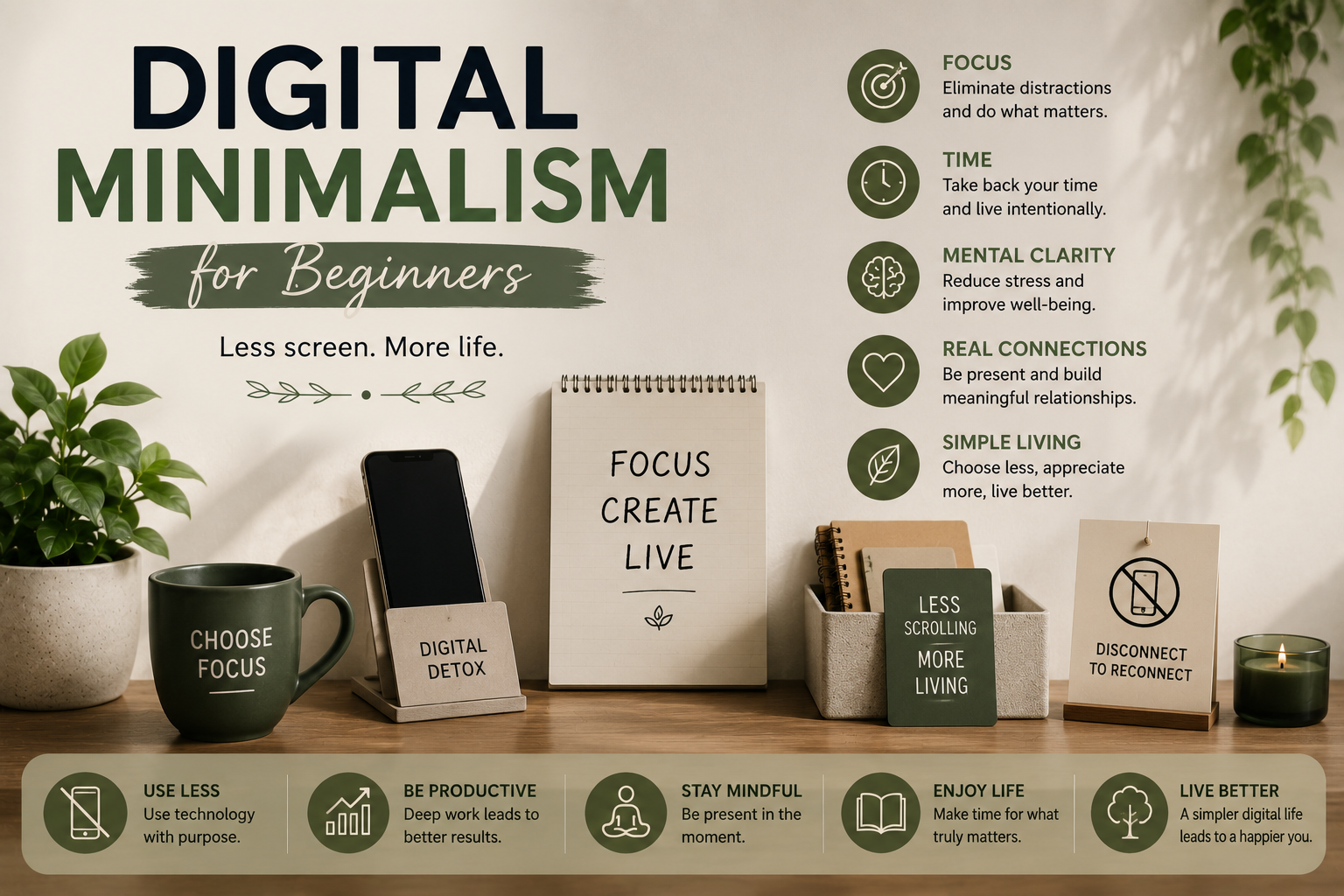
Digital minimalism for beginners is a values-based approach to technology where you only keep the digital tools that directly support what you care about, and you use them with clear, self-imposed rules. It is not about throwing your phone away. It is about making your apps serve your life, instead of letting them quietly run it.
Key Takeaways:
What it is: A philosophy of intentional technology use, not a temporary detox.
How it works: Clarify your values, take a 30-day break from optional tech, then reintroduce only what passes a strict cost-benefit test.
First step today: Take social apps off your home screen and turn off every notification except calls and direct messages from people.
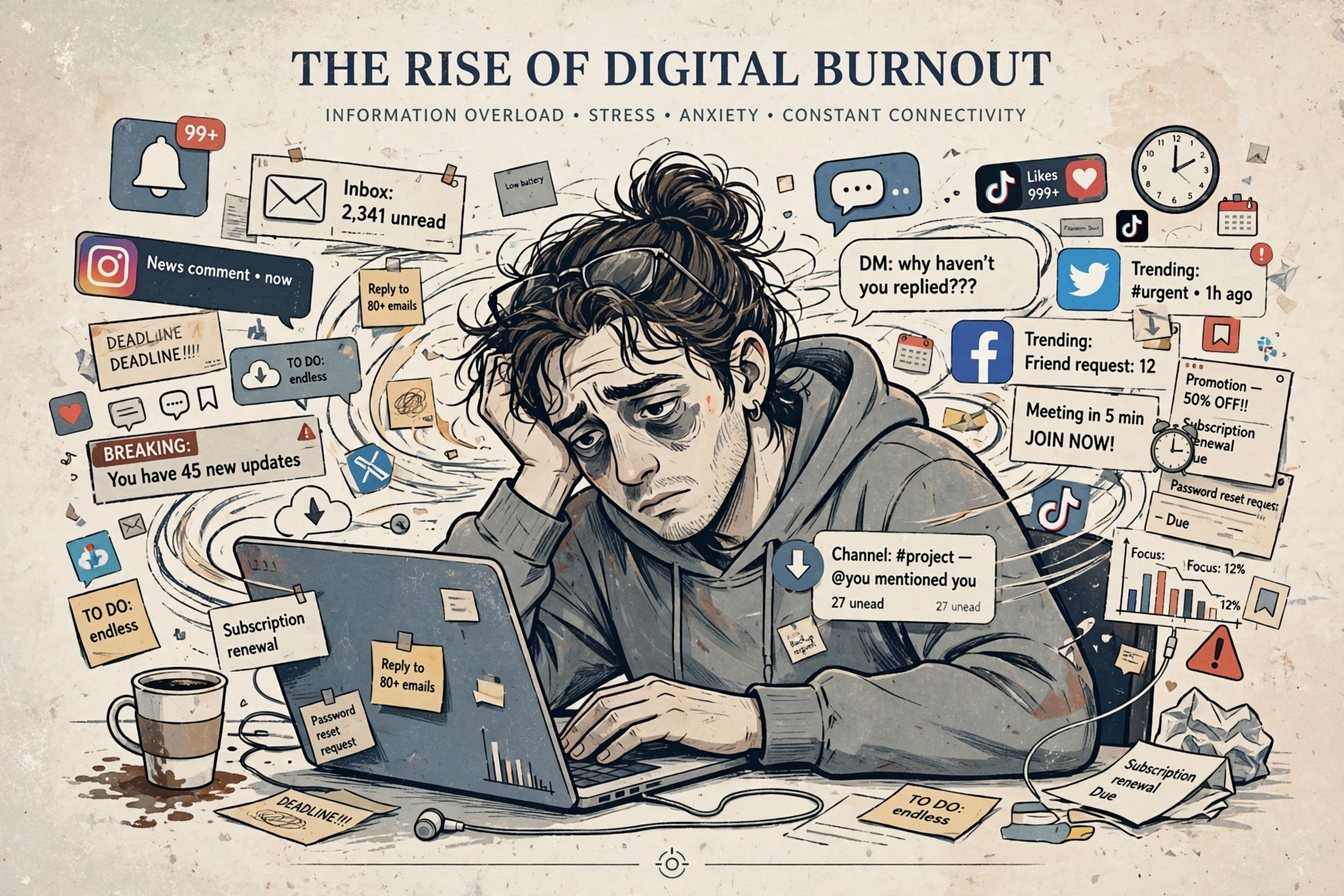
You know that loop. You pick up your phone to answer one message and twenty minutes later you are somewhere you never planned to go. The day was busy, but not focused. Your attention feels thin.
That is not a failure of discipline. You are up against systems engineered to keep you looking.
Digital minimalism is a more realistic way out than most people think.
What is Digital Minimalism, Really?
Direct Answer: Digital minimalism is a philosophy of technology use in which you focus your online time on a small number of carefully chosen activities that strongly support things you value, and you happily miss out on everything else.
The term was defined by computer science professor Cal Newport in his book Digital Minimalism, published by Portfolio. Newport frames it as a cost-benefit analysis for technology: you only adopt a tool if its benefits to your values substantially outweigh its costs to your attention and autonomy.
What Digital Minimalism Is NOT
This is where most beginners stall.
It is not anti-technology. You do not need a flip phone or a cabin in the woods. It is not a digital detox, either. A detox is short-term abstinence — a weekend off, a month without Instagram. It can feel good, then you return to the same setup and the same reflexes.
Minimalism is different. It is a long-term operating system. You do not just step away from the noise; you rebuild your digital environment so the noise does not automatically come back.
It is also not about owning less for the sake of looking minimal. It is about recognizing that digital clutter carries a real, measurable cost to your ability to think clearly and be present.
The 3 Core Principles That Make It Work
Newport boils it down to three ideas that are easy to understand and hard to argue with.
First, clutter is costly. Every app, feed, and account you maintain takes more than minutes. It leaves attention residue, that lingering mental fog when you switch tasks. It creates a low-level anxiety that you should be checking something.
Second, optimization matters. It is not enough for a tool to be somewhat useful. You have to think about how you use it to get the most benefit with the least harm. Two people can both use YouTube, but one uses it intentionally to learn a skill for an hour on Saturdays, while the other falls into autoplay for an hour every night.
Third, intentionality is satisfying. Choosing where your attention goes feels good in itself. That sense of agency matters more than whatever you might miss.
Why You Feel So Distracted: The Problem It Solves
You feel distracted because distraction is profitable.
This is what former Google design ethicist Tristan Harris, co-founder of the Center for Humane Technology, calls the Attention Economy. The business model is simple: your time is the product. The longer platforms keep you scrolling, the more ads you see.
Features like infinite scroll, autoplay, and red notification badges are not neutral design choices. They are built to exploit our natural craving for novelty and social approval. When your hand reaches for your phone without thinking, that is the system working as intended.
The cost compounds quietly. It is not just lost hours. It is a reduced capacity for solitude, for deep work, and for being fully with the people in front of you. Research from the American Psychological Association on stress and technology has consistently linked heavy, passive social media use to higher reported stress. The point of minimalism is not to shame you for using your phone. It is to give you a way to use it without being used by it.
Digital Minimalism vs. Digital Detox: Which One Do You Need?
A detox gives you a break. Minimalism gives you a plan for when you come back.
During a detox you abstain. You delete apps for a weekend or a month and enjoy the quiet. The problem is what happens after. You return to the same phone, same home screen, same triggers, and within a week the old patterns are back.
Digital minimalism assumes that break is not enough. After the pause, you decide what deserves to return and under what conditions. A detox asks, how do I feel without this? Minimalism asks, how do I want to live with this going forward, and what rules will make that possible? If you have tried and failed at detoxes before, this distinction is usually why.
How to Start: The 30-Day Digital Declutter for Beginners
This is Newport’s official method, simplified for a first attempt. I have done it twice. The first time my average screen time was 5 hours and 42 minutes with 87 pickups a day. By week two of the declutter, pickups were down to 31. The biggest change was not productivity. It was finally having the mental space to finish a book that had sat on my nightstand for four months.
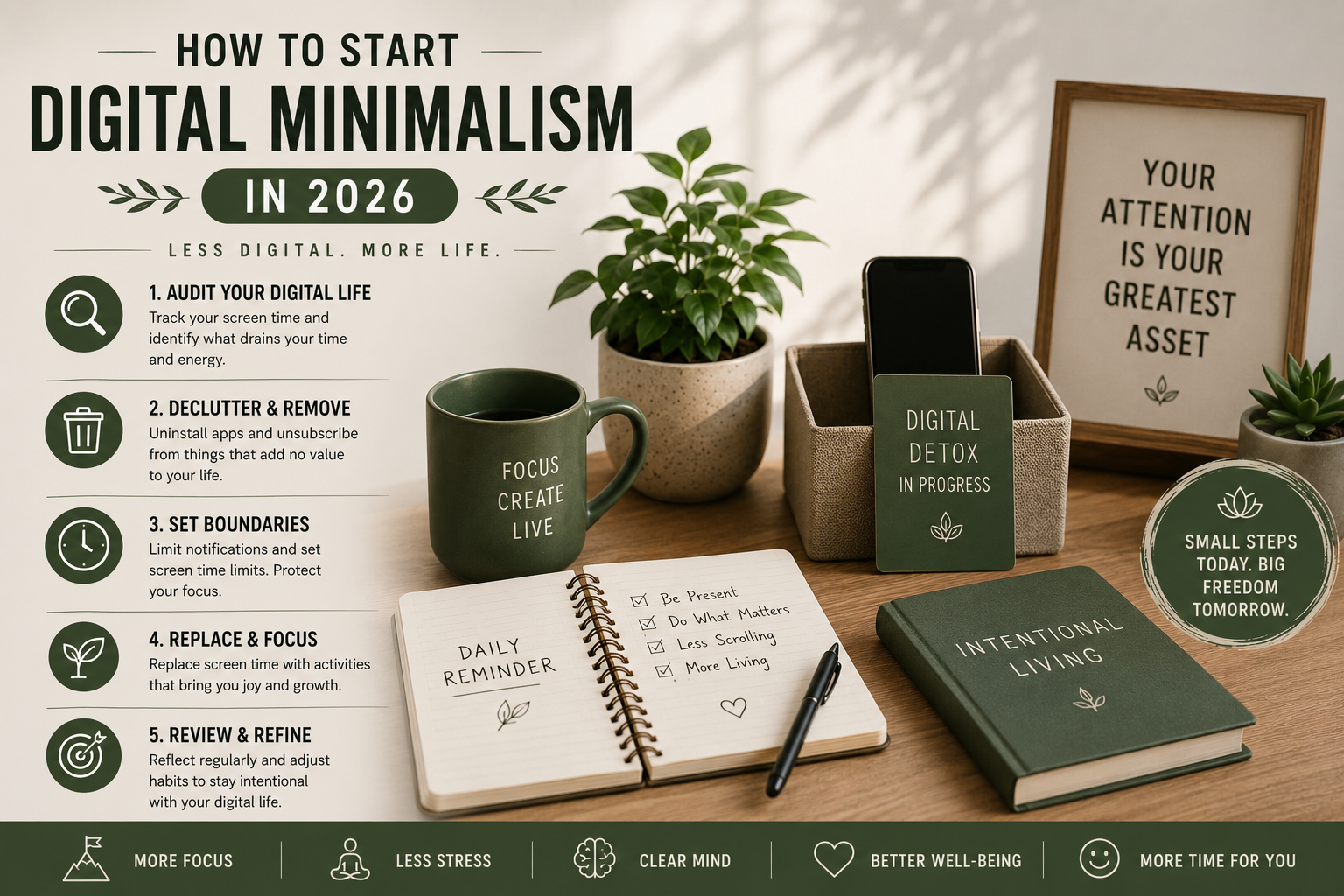
Step 1: Clarify What Matters to You Before You Delete Anything
Do not start by deleting. Start by defining.
Give yourself fifteen minutes and write down three or four things that feel non-negotiable right now. Not vague words like health or growth. Be concrete. Daily walks with no headphones. Cooking dinner at home three nights a week. Two hours of uninterrupted writing before noon. Weekly dinner with friends where phones stay in pockets.
Those become your filter. Without them, you are making decisions based on guilt, which never lasts.
Step 2: Take a 30-Day Break From Optional Technologies
Now you create quiet. Split your tools into essential and optional. Essential means your work or your closest relationships would genuinely break without it for thirty days. Optional means you could pause it and be okay.
For most people, optional includes Instagram, TikTok, X, Reddit, trending news apps, and YouTube recommendations. Essential stays — email, calendar, maps, banking, Slack if your job requires it.
What matters here is not just what you pause, but the rules you set for what stays. If email is essential, the rule might be you check it on your laptop twice a day, not on your phone. If you manage social media for work, the rule might be desktop only, during work hours, through a scheduler. You are not trying to make life harder. You are trying to hear your own thoughts again for the first time in a while.
Step 3: Fill the Void With Better Activities
A vacuum will always get filled. If you do not choose what fills it, your old habits will.
Newport emphasizes two replacements that work especially well. The first is solitude, meaning time alone with your own thoughts without other minds piping in through a feed. A walk without a podcast. Ten minutes with coffee before you touch your phone. A notebook at night.
The second is demanding, high-quality leisure. Things that take some effort and give something back. Learning to cook properly, joining a climbing gym or running group, fixing something with your hands, reading a book that requires focus. These satisfy in a way scrolling never does because they produce something real — a skill, a memory, an actual connection.
Step 4: Reintroduce Technology With Strict Rules
After thirty days, you bring things back one at a time and run them through two questions. Does this technology directly support one of my core values? Is it the best way to support that value?
If X helps you stay current for your work in journalism, it might pass the first test. But the best way to use it is almost never with push notifications on your phone. The best way might be a private list you check on your computer for thirty minutes at the end of the day. If something fails either question, it stays out. If it passes, it returns with a written rule that protects your attention.
When I did this, I only missed two of the eight things I removed. I have not reinstalled the other six since.
If 30 Days Feels Like Too Much: Start With These 3 Rules
If you are not ready for a full reset, these three boundaries create immediate breathing room. They train the same muscle with less friction.
Turn your smartphone back into a tool. Take every social and news app off your home screen. Bury them on the last page of your app library, or delete them from your phone and keep them on your computer only. Then go into settings and turn off all badges and sounds except for phone calls and direct messages from real people. Your phone should only interrupt you when a person needs you, not when an algorithm wants you.
Use social media on your terms. Decide before you open an app what you are there to do. Perhaps you check Instagram on Saturday morning for fifteen minutes to see close friends and reply to messages, and that is it for the week. Adding a little friction helps — using the browser version, logging out after each session, or removing the app on weekdays breaks the automatic loop.
Tame the inbox. Most messages feel urgent and very few are. Constant checking trains your brain to expect interruption. Try batching instead. Check email in two or three defined windows during the day rather than leaving the tab open. Mute the large group chats and catch up once in the evening. Almost nothing breaks. What returns is your ability to focus for an hour without reaching for something else.
That Make Beginners Quit After a Week
The first is trying to be pure. Going from seven hours of screen time to zero overnight burns most people out by Wednesday. Minimalism is not about perfection. It is about being a bit more deliberate today than yesterday. Pick one boundary and keep it.
The second is having no plan for the uncomfortable moments. The boredom in line at the store, the little spike of anxiety before a meeting. Your hand will reach for your phone out of habit. If you do not have something else ready for that moment, the old loop wins. Keep a book in your bag. Look around the room. Let yourself be bored for sixty seconds. Boredom is where ideas tend to surface.
The third is doing it quietly and alone. It is much harder to hold a boundary no one knows about. Tell one friend or partner what you are trying and why. Saying it out loud makes it real, and it gives someone a chance to support you instead of accidentally pulling you back in.
FAQ
Can I be a digital minimalist and still use Instagram or TikTok?
Yes. It is about how you use it, not whether you use it. A minimalist might use Instagram to share their pottery with a small community three times a week for thirty minutes on desktop, with no notifications. What they avoid is opening it compulsively throughout the day whenever there is a pause.
Do I need to delete all my apps to start?
No. You only pause the optional ones that create the most pull for you. The point is not punishment but space. Most people find they truly miss only one or two of the things they remove.
What if my job requires me to be online all day?
Then you apply minimalism to the edges. Keep what work demands, but be strict about the wrapper around it. Use a site blocker during deep work blocks, batch your messages instead of living in your inbox, and build a hard shutdown ritual where work tabs and notifications actually close at the end of the day.
How long does it take to feel the benefits?
Many people notice a calmer baseline within the first week once the urge to constantly check fades. Better sleep, longer focus, and more enjoyment in offline activities usually show up in weeks three and four, after you have reinvested that attention elsewhere.
What is the first, easiest step I should take today?
Remove social apps from your home screen and turn off every notification except phone calls and direct messages from people. It takes less than two minutes and immediately cuts down on mindless unlocks.
Read more: Digital Minimalism for Beginners: Reclaim Your Time in 2026

1 Comment
Pingback: 15 Profitable Digital Business Ideas to Start in 2026