

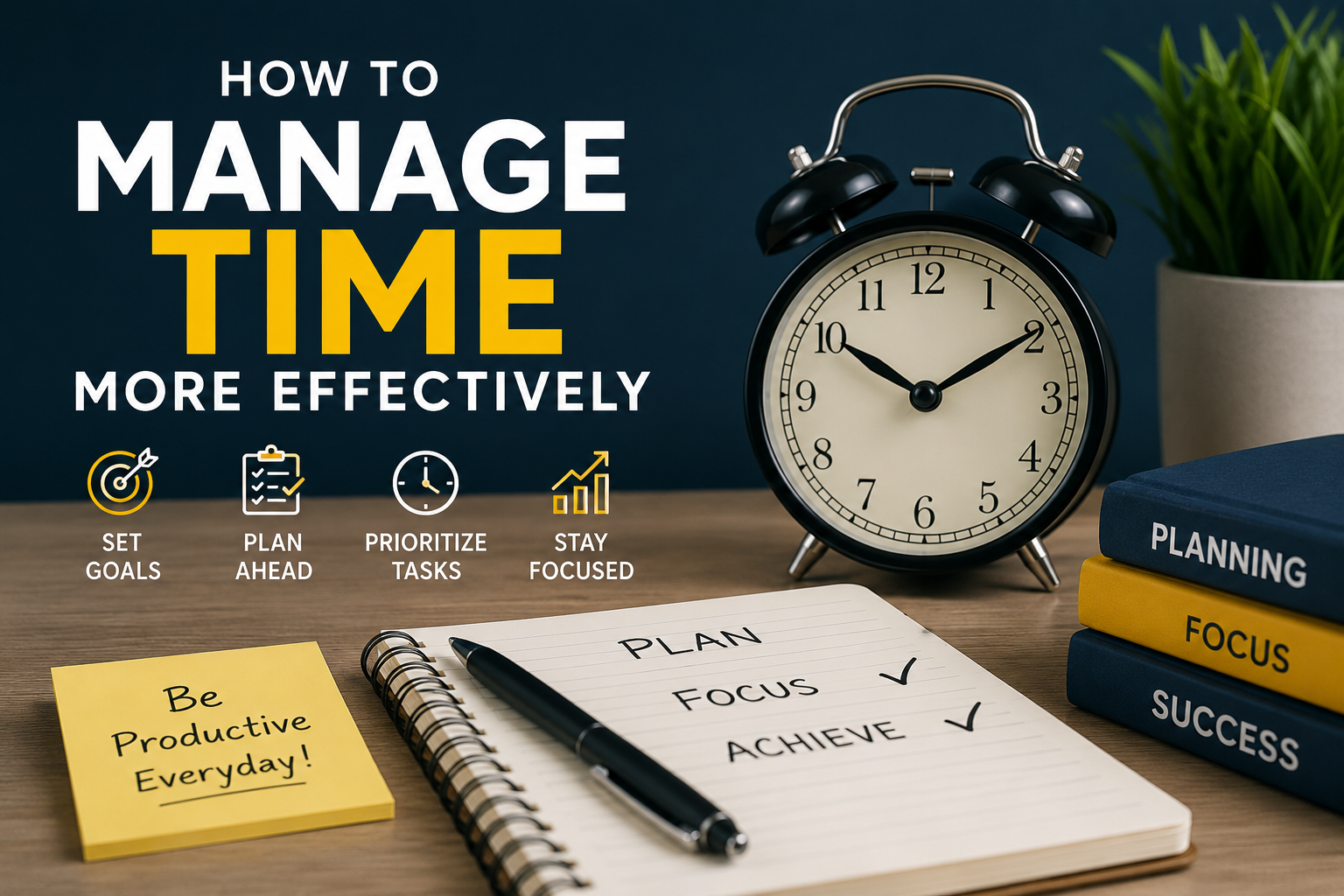
How to Manage Time More Effectively.Time is one of the few resources that everyone receives equally, yet many people feel there are never enough hours in the day. Between work responsibilities, family commitments, personal goals, and unexpected interruptions, it can be difficult to stay organized and productive. The good news is that effective time management isn’t about working longer hours—it’s about making better decisions with the time you already have.
Learning how to organize your day, prioritize important tasks, and eliminate distractions can improve productivity while reducing unnecessary stress. Whether you’re a student, business owner, freelancer, or working professional, developing strong time management skills helps you accomplish more without feeling overwhelmed.
In this guide, you’ll discover practical strategies that can help you use your time wisely, stay focused, and build habits that support long-term success.
Why Time Management Matters
Good time management creates structure in your daily routine. Instead of constantly reacting to urgent tasks, you become proactive and intentional with your schedule. This approach leads to higher productivity, fewer missed deadlines, and a healthier balance between work and personal life.
Managing your time well also reduces mental fatigue. When you know exactly what needs to be done, your mind spends less energy worrying about unfinished tasks and more energy completing meaningful work.
Strong productivity habits, daily planning, and goal-setting strategies can significantly improve both personal and professional performance.
Set Clear Goals Before Planning Your Day
One of the biggest reasons people waste time is a lack of direction. Before creating a schedule, identify what you want to accomplish.
Clear goals help you focus on tasks that truly matter instead of getting distracted by activities that offer little value. Breaking large objectives into smaller milestones also makes progress easier to track.
Whether your goal is completing an important project, improving your health, or learning a new skill, having a clear destination makes every decision more purposeful.
Prioritize Tasks Based on Importance
Not every task deserves equal attention. Some activities have a much greater impact on your results than others.Begin each day by identifying your most important responsibilities. Completing high-priority work first ensures that essential tasks receive your best energy and concentration.This simple habit prevents procrastination and keeps your schedule aligned with your long-term goals.
Create a Realistic Daily Schedule
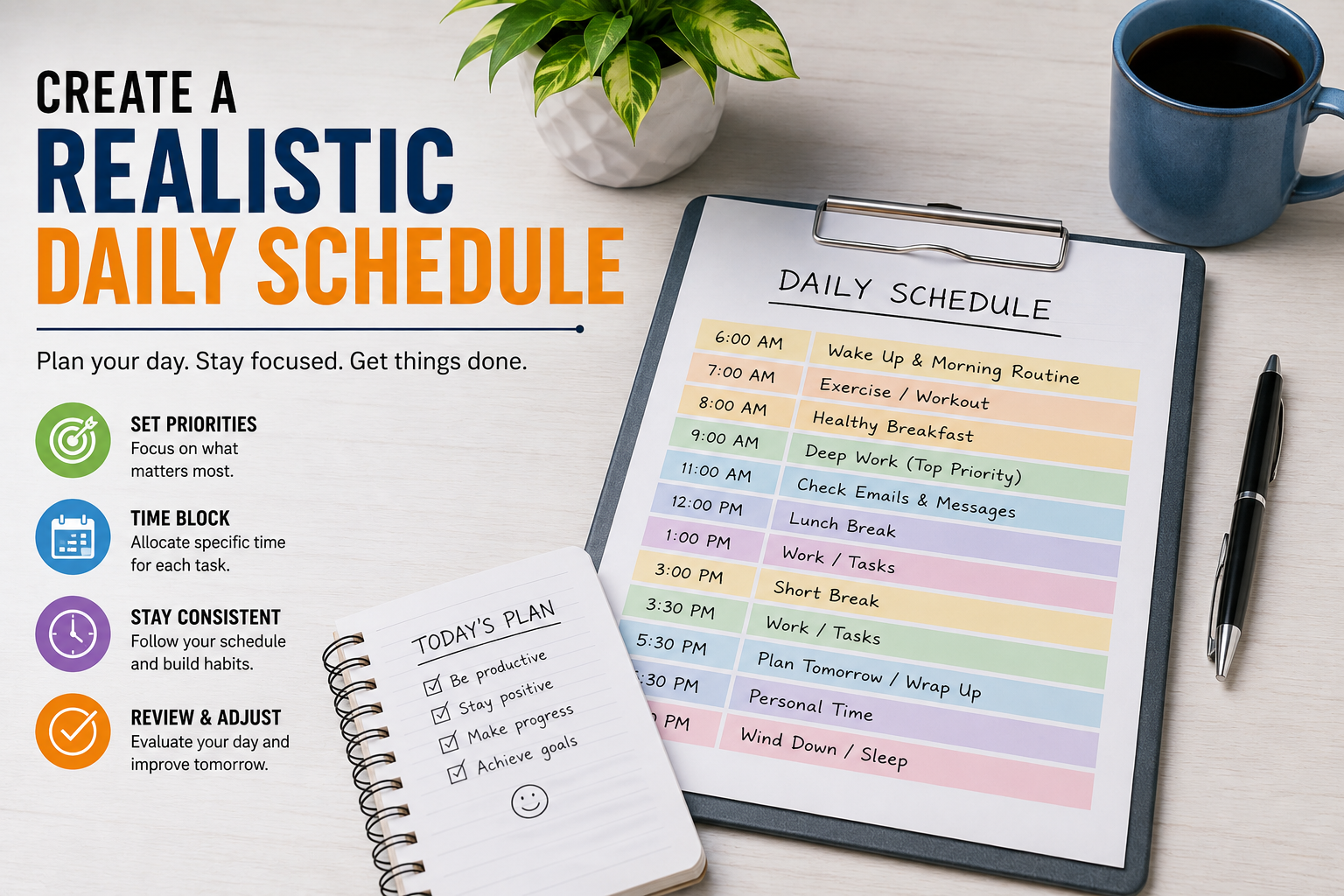
A well-planned schedule gives your day structure without making it feel overwhelming.Instead of filling every minute with work, allow enough time for breaks, meals, and unexpected interruptions. A realistic schedule is easier to follow consistently and reduces frustration when plans change.Using digital calendars, planners, or productivity apps can help organize appointments, deadlines, and personal commitments in one place.
Eliminate Common Distractions
Modern technology offers countless distractions that quietly consume valuable time.Frequent social media checks, unnecessary notifications, and multitasking often reduce productivity far more than people realize. Creating a distraction-free workspace allows you to concentrate fully on the task at hand.
Consider silencing notifications during focused work sessions and setting specific times for checking emails or social media.Small changes like these often lead to significant improvements in daily efficiency.
Focus on One Task at a Time
Many people believe multitasking helps them accomplish more, but research consistently shows the opposite. Constantly switching between tasks reduces concentration and increases mistakes.
Single-tasking allows your brain to remain fully engaged with one activity before moving to the next. This approach often leads to higher-quality work completed in less time.Giving your full attention to one priority at a time creates better results and lowers mental stress.
Learn to Say No
One of the most overlooked productivity skills is knowing when to decline unnecessary commitments.Accepting every request, invitation, or project leaves little time for your own priorities. Politely saying no to activities that don’t support your goals protects your schedule and reduces unnecessary pressure.Healthy boundaries allow you to focus on meaningful work while maintaining a balanced lifestyle.
Use Time Blocking for Better Productivity
Time blocking is a simple planning technique that assigns specific periods for different activities.Instead of working randomly throughout the day, dedicate blocks of time for focused work, meetings, exercise, learning, and relaxation.This method minimizes decision fatigue because you already know what should be done during each part of the day.Many highly productive professionals rely on time blocking to maintain consistency.
Take Regular Breaks

Working continuously for long periods often reduces concentration and creativity.Short breaks give your mind an opportunity to recover, making it easier to maintain focus throughout the day. Walking for a few minutes, stretching, or simply stepping away from your desk can improve energy and mental clarity.Balanced productivity always includes proper rest.
Review Your Progress Regularly
Time management isn’t something you master once—it improves through regular evaluation.At the end of each week, review what you accomplished, where you lost time, and which habits helped you stay productive.
Making small adjustments over time creates continuous improvement without requiring dramatic lifestyle changes.Tracking progress also keeps you motivated as you see consistent results.
Build Healthy Habits That Support Productivity
Effective time management depends on more than planning. Your physical and mental well-being directly affect your ability to stay focused.Getting enough sleep, eating nutritious meals, exercising regularly, and managing stress all contribute to better concentration and decision-making.When your body and mind are healthy, using your time effectively becomes much easier.
Conclusion
Managing your time effectively isn’t about filling every hour with work—it’s about making intentional choices that help you achieve meaningful goals. By setting clear priorities, creating realistic schedules, minimizing distractions, and building healthy daily habits, you can improve productivity while reducing stress.
Remember that lasting change comes from consistency rather than perfection. Small improvements practiced every day lead to significant long-term results. Whether you’re balancing work, studies, or personal responsibilities, these practical strategies can help you make the most of every day and create a more organized, productive, and fulfilling life.
Frequently Asked Questions (FAQs)
1. What is the most effective way to manage time?
The most effective approach combines clear goal setting, task prioritization, realistic scheduling, and minimizing distractions. Consistency is more important than using complex productivity systems.
2. Why do I struggle with time management?
Common reasons include procrastination, lack of planning, poor prioritization, multitasking, and frequent distractions from technology or unnecessary commitments.
3. How can I improve my productivity every day?
Focus on your most important task first, create a daily schedule, work without distractions, take regular breaks, and review your progress at the end of the day.
4. Is multitasking a good time management strategy?
No. Multitasking often reduces focus and increases mistakes. Concentrating on one task at a time usually leads to better productivity and higher-quality results.
5. Which tools can help with time management?
Digital calendars, task management apps, planners, reminder tools, and time-blocking techniques are excellent resources for organizing tasks and staying productive.
