

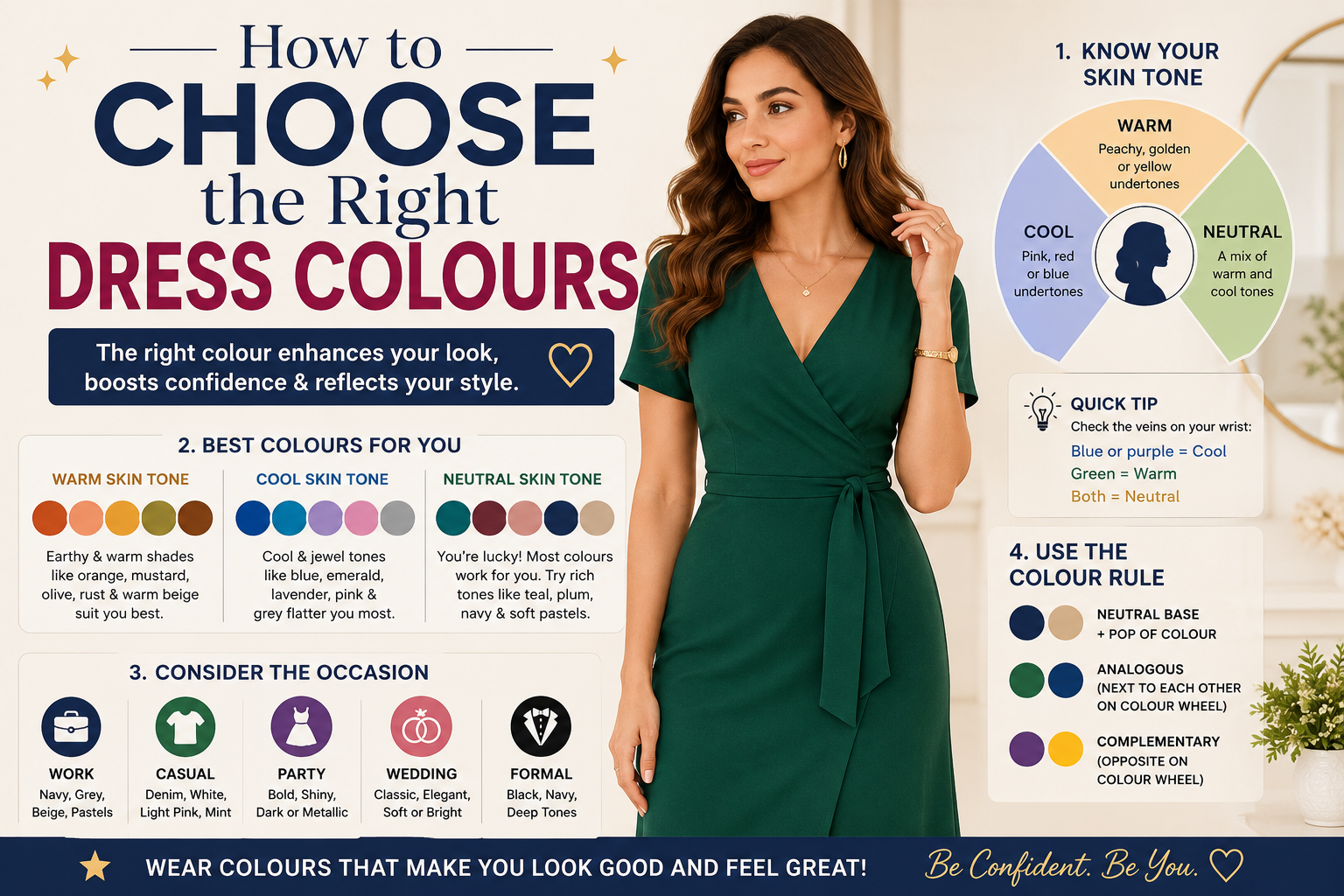
Choose the Right Dress Colours . One of the most important elements of fashion is colour. The colours you wear can influence how others perceive you, affect your confidence, and even highlight your best features. Understanding how to choose the right dress colours can transform your wardrobe and help you create stylish looks for every occasion.
Many people struggle when selecting colours because fashion trends constantly change, and personal preferences may not always align with what looks best. However, learning the basics of colour selection can make dressing easier and more enjoyable. Whether you are preparing for a formal event, a job interview, a wedding, or a casual day out, the right colour choice can elevate your appearance instantly.
In this complete fashion guide, you will learn how to choose dress colours according to your skin tone, body type, season, occasion, and personal style. By understanding these principles, you can build a wardrobe that looks fashionable, balanced, and timeless.
Why Dress Colours Matter in Fashion
Colours play a significant role in fashion because they create visual impact and communicate emotions. Fashion experts often emphasize that colour is the first thing people notice before they observe the details of an outfit.
Different colours create different impressions. For example, black often symbolizes sophistication and elegance, while blue represents trust and professionalism. Red is associated with confidence and energy, whereas pastel shades create a soft and feminine appearance.
The psychology of colours helps individuals make smarter fashion decisions. Wearing colours that suit your personality and occasion can improve confidence and ensure you leave a lasting impression.
Colour Theory in Fashion
Before learning how to choose the right dress colours, it is helpful to understand basic colour theory. Colour theory explains how colours interact with each other and how combinations create harmony.
The colour wheel consists of primary, secondary, and tertiary colours. Fashion designers frequently use this tool to create visually appealing outfits.
Complementary colours are opposite each other on the colour wheel and create strong contrast. Analogous colours sit next to each other and create a harmonious appearance. Monochromatic outfits use different shades of the same colour for a sophisticated and elegant effect.
These principles makes it easier to combine dresses, accessories, and footwear while maintaining a balanced appearance.
How to Choose Dress Colours Based on Skin Tone
One of the most important factors when selecting dress colours is your skin tone. The right colour can enhance your natural beauty, while the wrong shade may make your complexion appear dull.
Warm Skin Tones
People with warm skin tones often have golden, yellow, or peach undertones. If gold jewelry looks better on you than silver, you likely have a warm undertone.
Warm skin tones generally look best in earthy colours such as mustard yellow, olive green, rust orange, camel brown, and warm shades of red. These colours complement the natural warmth of the skin and create a healthy glow.
Cool Skin Tones
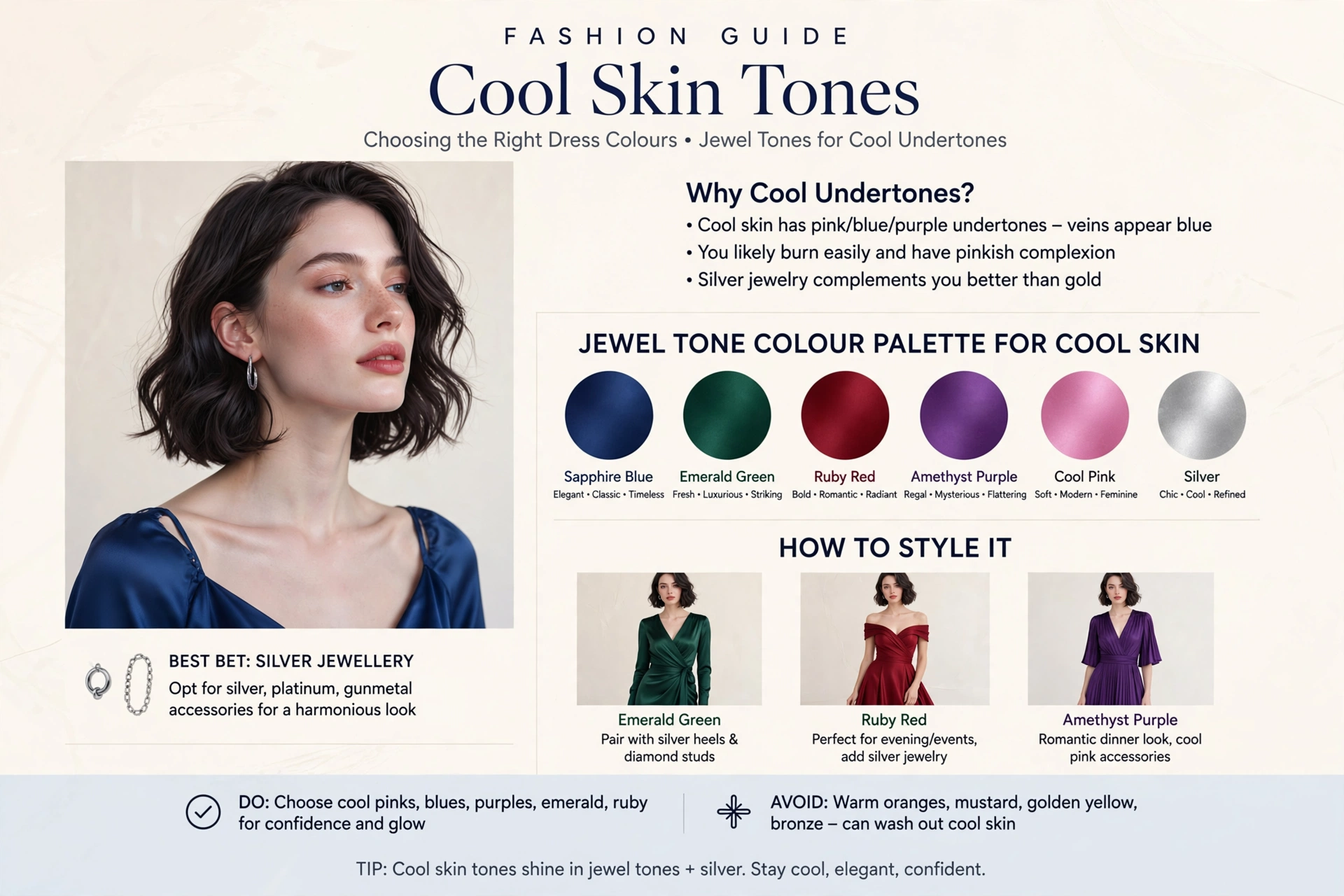
Individuals with cool skin tones usually have pink, red, or blue undertones. Silver jewelry tends to look more flattering on cool complexions.
Cool skin tones often shine in colours like emerald green, royal blue, lavender, icy pink, and deep purple. These shades create contrast and enhance natural features beautifully.
Neutral Skin Tones
Neutral skin tones have a balanced mix of warm and cool undertones. This is considered one of the most versatile skin tones because it works well with a wide range of colours.
People with neutral undertones can confidently wear colours such as navy blue, dusty rose, teal, soft gray, and classic black without worrying about colour clashes.
Choosing Dress Colours According to the Occasion
The occasion significantly influences the colours you should wear. A colour that works perfectly for a wedding may not be suitable for a business meeting.
Professional and Corporate Settings
In professional environments, colours should convey confidence, reliability, and professionalism. Shades such as navy blue, charcoal gray, black, and white are popular choices because they create a polished appearance.
Blue is especially effective because it is associated with trustworthiness and competence. This is why many corporate professionals prefer blue attire for meetings and presentations.
Weddings and Celebrations
Weddings provide an opportunity to wear vibrant and elegant colours. Rich shades such as burgundy, emerald green, champagne gold, and deep navy are excellent choices.
The key is balancing sophistication with celebration. Bright and luxurious colours often photograph beautifully and contribute to a festive atmosphere.
Casual Outings
Casual settings allow greater freedom with colour choices. Soft pastels, floral shades, and light neutrals create relaxed and approachable looks.
Colours such as baby blue, mint green, peach, and light lavender are ideal for daytime outings, brunches, and casual gatherings.
Selecting Dress Colours by Season
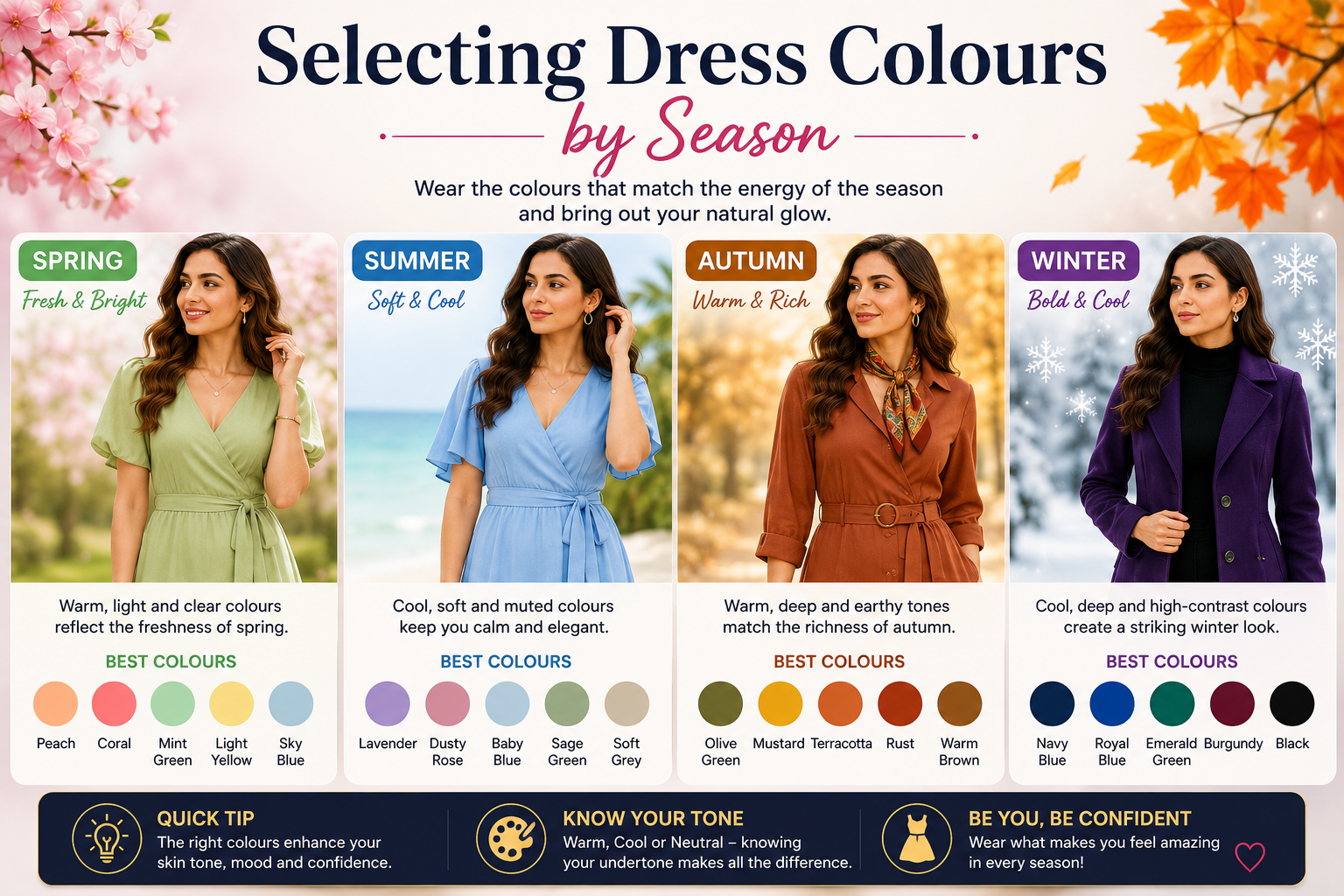
Fashion trends often change with the seasons, and colour selection should reflect seasonal moods and environmental tones.
Spring Colours
Spring is associated with freshness and renewal. Light and cheerful colours work particularly well during this season.
Popular spring colours include pastel pink, mint green, lavender, sky blue, and soft yellow. These shades mirror blooming flowers and create a refreshing appearance.
Summer Colours
Summer fashion embraces bright and vibrant tones. The warm weather encourages lighter fabrics and energetic colours.
Popular summer shades include coral, turquoise, white, bright yellow, and vibrant pink. These colours reflect sunlight and complement the lively atmosphere of summer.
Autumn Colours
Autumn fashion is inspired by nature’s changing colours. Warm and earthy shades dominate seasonal wardrobes.
Colours such as burnt orange, mustard, olive green, burgundy, and chocolate brown perfectly capture the autumn aesthetic.
Winter Colours
Winter wardrobes often feature rich, dramatic colours. Deep shades create elegance and sophistication during colder months.
Popular winter colours include black, deep red, forest green, navy blue, and dark purple.
Dress Colours and Body Shape Perception
Colours can influence how body proportions appear. Strategic colour choices can enhance confidence and create a balanced silhouette.
Dark colours such as black, navy, and charcoal create a slimming effect because they absorb light and reduce visual attention. This is why black remains one of the most popular fashion colours worldwide.
Lighter colours attract attention and can emphasize specific areas. If you want to highlight a feature, wearing a lighter shade in that area can be effective.
Colour blocking is another technique that uses contrasting colours to create shape and visual interest. When used correctly, it can enhance body proportions and create a stylish look.
How Personal Style Influences Colour Choices
Fashion is deeply personal, and colour preferences often reflect personality traits.
People who prefer classic and timeless styles usually gravitate toward neutral colours such as black, white, beige, and navy. These colours offer versatility and elegance.
Creative individuals often enjoy experimenting with bold shades such as bright red, electric blue, and vibrant yellow. These colours express confidence and individuality.
Romantic fashion styles frequently feature soft colours like blush pink, lavender, and cream. These shades create a gentle and feminine aesthetic.
Understanding your personal style helps narrow colour choices and makes shopping more efficient.
Common Mistakes When Choosing Dress Colours
Many people make colour-related fashion mistakes that reduce the overall impact of their outfits.
One common mistake is following trends without considering skin tone compatibility. A trendy colour may not necessarily be flattering for everyone.
Another mistake is wearing too many bright colours at once. Excessive colour combinations can appear overwhelming and reduce visual harmony.
Ignoring the occasion is also problematic. Bright neon colours may be appropriate for casual events but often appear unprofessional in formal settings.
Choosing colours based solely on personal preference without considering body shape, season, or environment can limit style potential.
Building a Versatile Colour Palette
A well-planned wardrobe includes a balanced colour palette that allows easy outfit coordination.
Start with neutral foundation colours such as black, white, beige, gray, and navy. These shades work with almost every other colour and provide maximum versatility.
Next, add accent colours that reflect your personality. Examples include emerald green, burgundy, coral, or dusty pink. Accent colours create interest while maintaining flexibility.
Finally, incorporate seasonal colours that refresh your wardrobe throughout the year. This approach ensures variety without excessive spending.
A thoughtfully curated colour palette simplifies outfit planning and enhances overall style consistency.
Conclusion
Learning how to choose the right dress colours is one of the most valuable fashion skills anyone can develop. The perfect colour can enhance your complexion, complement your body shape, boost confidence, and ensure you look appropriate for every occasion. By understanding skin tones, colour theory, seasonal trends, and personal style preferences, you can make informed decisions that elevate your appearance effortlessly.
Fashion is ultimately about self-expression, and colour plays a central role in that expression. Rather than following trends blindly, focus on selecting colours that make you feel confident, comfortable, and authentic. With the right approach, your wardrobe can become more versatile, stylish, and timeless.
FAQs
1. What is the best dress colour for all skin tones?
Navy blue is often considered one of the most universally flattering colours because it complements warm, cool, and neutral skin tones.
2. Which dress colours make you look slimmer?
Dark shades such as black, navy blue, charcoal gray, and deep burgundy generally create a slimming visual effect.
3. How do I know if a colour suits me?
Observe how your skin appears when wearing a colour. If your complexion looks bright and healthy, the colour likely suits you well.
4. Can I wear bright colours to formal events?
Yes, but choose sophisticated shades such as emerald green, burgundy, or royal blue rather than extremely neon tones.
Read more: How to Choose the Right Dress Colours for Every Occasion
