

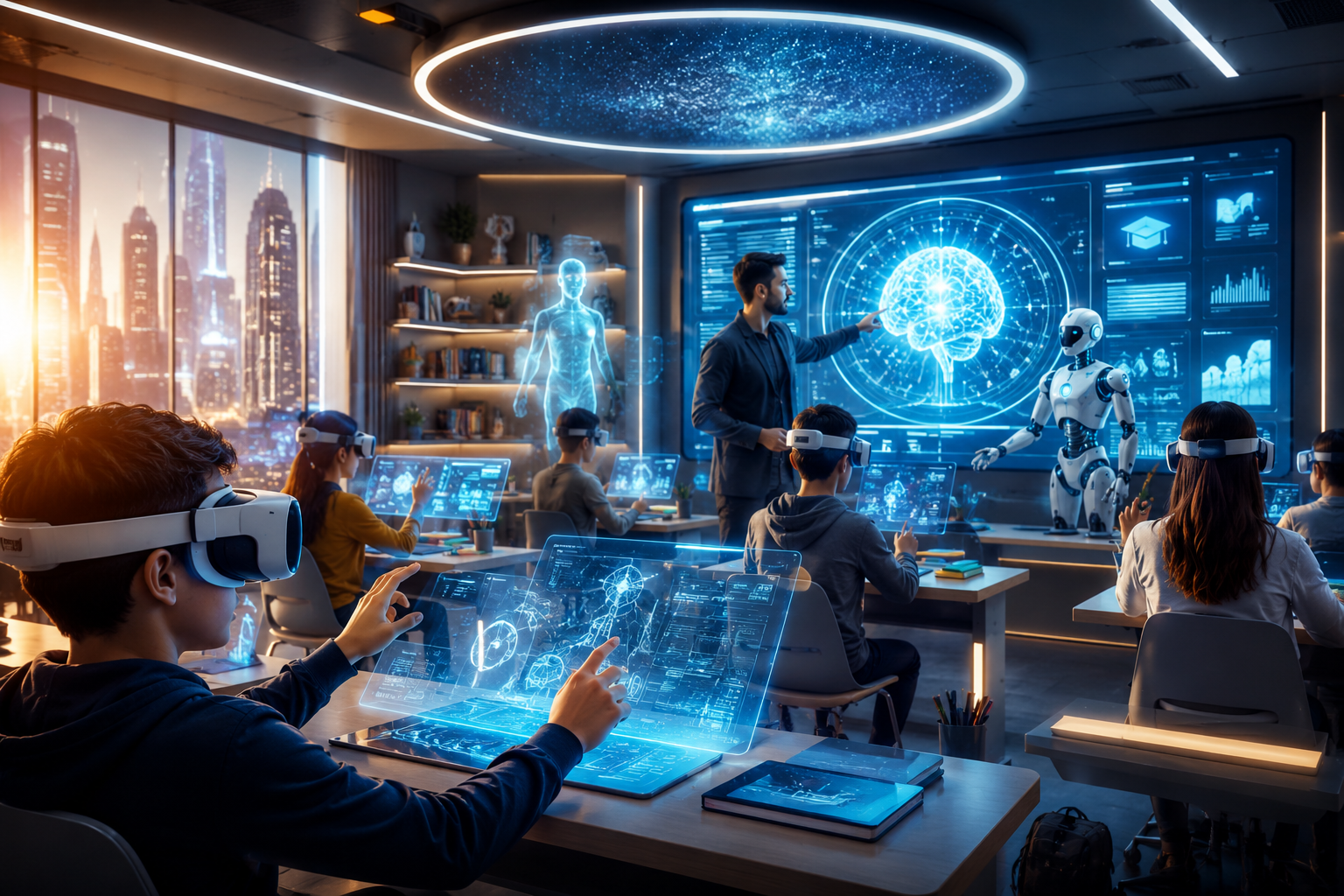
The world of education is experiencing a transformation unlike anything seen before. Artificial Intelligence has already changed how people learn, work, communicate, and solve problems. From AI-powered tutoring systems to automated content creation, technology is reshaping classrooms and workplaces across the globe. However, as AI becomes more advanced, a new question arises: what comes next?
Future education trends after AI is becoming essential for students who want to stay competitive in the coming decades. While AI can automate many tasks, it cannot completely replace human creativity, emotional intelligence, critical thinking, and ethical decision-making. The future belongs to individuals who can work alongside intelligent technologies while continuously adapting to new challenges.
Educational institutions are beginning to redesign learning models to prepare students for an AI-driven future. Traditional memorization-based learning is gradually giving way to skill-based education that emphasizes innovation, collaboration, and lifelong learning. Students who understand these changes today will be better prepared for tomorrow’s opportunities.
This article explores the most important future education trends after AI, the emerging skills students must develop, and how education systems are likely to evolve in the years ahead.
The Future Education Landscape After AI
Artificial Intelligence is not the final destination of technological progress. Instead, it is a stepping stone toward a more interconnected and intelligent world. As AI handles repetitive and data-driven tasks, education will shift its focus toward uniquely human capabilities.
Future learning environments will emphasize adaptability over memorization. Students will need to understand how to collaborate with machines, evaluate AI-generated information, and make informed decisions based on complex data. The ability to learn new skills quickly will become more valuable than mastering a single subject for life.
The concept of education itself is changing. Instead of spending years acquiring fixed knowledge, learners will continuously update their expertise throughout their careers. This shift represents one of the most significant future education trends after AI and will influence every aspect of learning.
Why Traditional Learning Models Are Changing
For decades, education systems focused heavily on memorization, standardized testing, and structured curricula. While these methods helped build foundational knowledge, they often failed to prepare students for rapidly changing industries.
AI can now retrieve information instantly, making simple memorization less valuable than understanding how to analyze and apply knowledge. Employers increasingly seek individuals who can think creatively, solve unfamiliar problems, and adapt to technological changes.
As a result, schools and universities are redesigning courses to encourage project-based learning, interdisciplinary thinking, and real-world problem solving. These approaches help students develop practical skills that remain valuable even as technology evolves.
The Rise of Lifelong Learning
Learning Will Never Truly End
One of the most important future education trends after AI is the emergence of lifelong learning. In the past, students completed their education before entering the workforce. Today, technological advancements occur so quickly that continuous learning has become a necessity.
Professionals will regularly update their skills through online courses, certifications, workshops, and micro-credentials. Learning platforms powered by advanced technologies will offer personalized educational experiences tailored to individual goals and career paths.
Students must develop a mindset that embraces constant growth. Those who remain curious and adaptable will be better positioned to succeed in future industries.
Personalized Learning Experiences
AI has already introduced personalized learning, but future systems will become even more sophisticated. Educational platforms will analyze individual learning styles, strengths, weaknesses, and interests to create customized educational journeys.
Instead of following a one-size-fits-all curriculum, students will receive targeted content that maximizes understanding and engagement. This personalized approach will improve learning outcomes while allowing learners to progress at their own pace.
Critical Thinking Becomes More Valuable Than Ever
As AI-generated content becomes widespread, the ability to evaluate information critically will become a core educational priority. Students will need to distinguish between accurate information, misinformation, and biased content.
Future employers will value individuals who can analyze situations independently rather than relying entirely on automated systems. Critical thinking involves questioning assumptions, examining evidence, and considering multiple perspectives before making decisions.
Educational institutions are increasingly integrating analytical reasoning exercises into their curricula. This shift reflects one of the most significant future education trends after AI because human judgment remains irreplaceable in many situations.
Creativity Will Drive Future Innovation
Human Creativity Remains Irreplaceable
While AI can generate art, music, writing, and designs, true creativity involves imagination, originality, and emotional understanding. These uniquely human qualities are difficult to replicate fully through algorithms.
Future careers will increasingly reward creative thinking. Students who can develop innovative solutions, create compelling experiences, and think outside conventional boundaries will enjoy significant advantages.
Educational programs are placing greater emphasis on creative problem-solving, design thinking, and innovation-based projects. These experiences encourage students to experiment, take risks, and develop original ideas.
Innovation Across Multiple Disciplines
Future innovation will occur at the intersection of different fields. Students who combine knowledge from technology, business, science, arts, and social sciences will be especially valuable.
Interdisciplinary learning is emerging as a major component of future education trends after AI because complex global challenges require diverse perspectives and collaborative solutions.
Emotional Intelligence and Human Skills
As machines become smarter, human-centered skills become more important. Emotional intelligence includes self-awareness, empathy, communication, relationship management, and social understanding.
Many future jobs will require professionals to work closely with people, manage teams, negotiate conflicts, and build meaningful relationships. These responsibilities cannot be fully automated.
Schools are increasingly recognizing the importance of social-emotional learning. Programs that teach communication, collaboration, and leadership skills are becoming more common because employers consistently rank these abilities among their most desired qualities.
Students who develop strong emotional intelligence will be better equipped to navigate both professional and personal challenges in an AI-powered world.
Digital Literacy Beyond Basic Technology
The Advanced Technologies
Future students will need more than basic computer skills. They must understand how emerging technologies function and influence society.
Digital literacy will include knowledge of artificial intelligence, machine learning, data analytics, cybersecurity, blockchain technology, and digital ethics. Even students pursuing non-technical careers will benefit from understanding these concepts.
Technology is becoming deeply integrated into every industry. Therefore, digital competence will be a foundational requirement rather than a specialized skill.
Responsible Technology Use
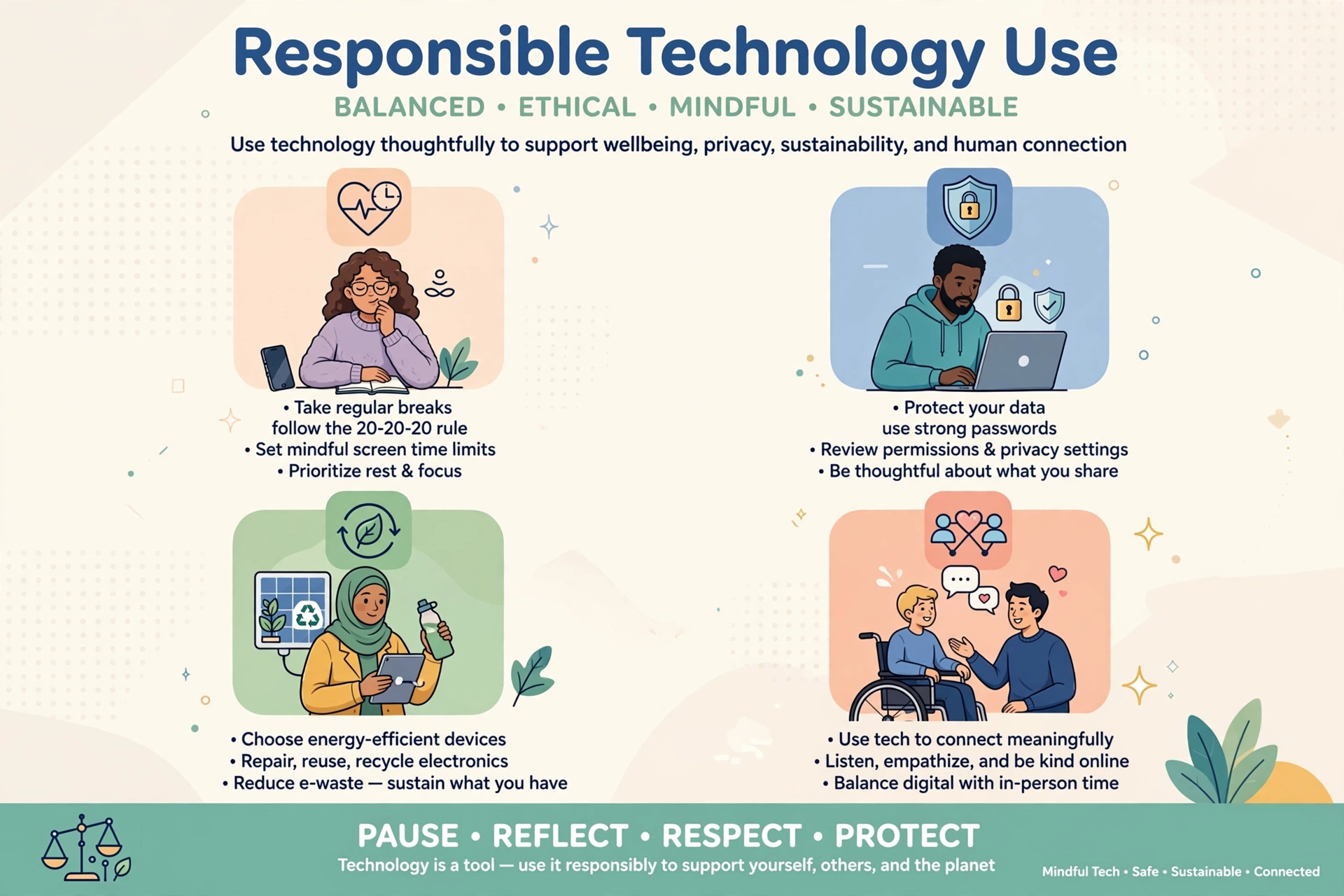
Future education will also focus on ethical technology use. Students must understand privacy concerns, data protection, algorithmic bias, and responsible AI implementation.
As technology becomes increasingly powerful, ethical decision-making will play a critical role in ensuring positive societal outcomes.
The Growth of Project-Based Learning
Traditional lectures are gradually being supplemented by hands-on learning experiences. Project-based learning encourages students to apply knowledge to real-world challenges.
Instead of simply studying concepts theoretically, learners collaborate on meaningful projects that require research, creativity, communication, and problem-solving skills. These experiences mirror workplace environments more accurately than traditional exams.
Project-based learning represents one of the most practical future education trends after AI because it helps students develop transferable skills that remain relevant across industries.
Global Collaboration and Remote Learning
The future workforce will be increasingly global. Students may collaborate with peers, instructors, and employers from different countries and cultures.
Advancements in communication technologies make international learning experiences more accessible than ever. Virtual classrooms, collaborative platforms, and immersive digital environments enable global participation regardless of location.
Educational institutions are preparing students for this reality by emphasizing cross-cultural communication, teamwork, and global awareness. These skills help learners succeed in diverse professional environments.
Remote learning is also expected to remain a significant part of education. Flexible learning models allow students to access high-quality instruction from anywhere in the world.
Data Literacy and Analytical Skills
The digital economy generates enormous amounts of information every day. Future professionals must know how to interpret and utilize this data effectively.
Data literacy involves understanding how data is collected, analyzed, visualized, and applied to decision-making processes. Students who can work confidently with information will have a competitive advantage in many industries.
Educational programs increasingly include data analysis and evidence-based reasoning because these abilities support informed decision-making and strategic thinking.
As businesses rely more heavily on data-driven insights, analytical skills will remain among the most valuable competencies in the future workforce.
Ethical Education in an AI-Driven World
Technology creates tremendous opportunities, but it also introduces complex ethical questions. Future education must prepare students to address issues related to privacy, fairness, transparency, and accountability.
Ethics will become an essential component of technology education. Students must learn how innovations affect individuals, communities, and society as a whole.
The integration of ethics into educational curricula reflects a growing recognition that technological progress should be guided by human values. Understanding these responsibilities is a crucial part of navigating future education trends after AI successfully.
Future Careers and Skill Adaptability
Many future jobs do not exist today. New industries will emerge as technology continues to evolve, creating opportunities that are difficult to predict.
Rather than preparing for a single career path, students should focus on developing adaptable skill sets that can transfer across multiple professions. Learning how to learn will become one of the most valuable abilities a person can possess.
Adaptability enables individuals to respond effectively to changing market demands, technological advancements, and emerging opportunities. Educational systems increasingly prioritize this flexibility because future success depends on continuous growth and evolution.
Conclusion
The future of education extends far beyond Artificial Intelligence. While AI will continue transforming learning and work, the most valuable human qualities will become even more important. Critical thinking, creativity, emotional intelligence, adaptability, digital literacy, ethical reasoning, and lifelong learning will define success in the decades ahead.
The most significant future education trends after AI focus on preparing students for a world where humans and intelligent technologies work together. Educational institutions are moving toward personalized learning, project-based experiences, interdisciplinary education, and continuous skill development.
Students who embrace these changes today will be better equipped to thrive in tomorrow’s rapidly evolving world. The future belongs not only to those who understand technology but also to those who can use it wisely, creatively, and ethically.
FAQs
1. What are the future education trends after AI?
Future education trends after AI include personalized learning, lifelong education, project-based learning, digital literacy, emotional intelligence development, and interdisciplinary skill-building.
2. Why is critical thinking important in the AI era?
Critical thinking helps students evaluate information, identify misinformation, solve complex problems, and make informed decisions that AI cannot fully automate.
3. What skills should students focus on for the future?
Students should focus on creativity, adaptability, emotional intelligence, communication, digital literacy, analytical thinking, and ethical decision-making.
4. Will AI replace teachers completely?
No. AI can support learning and automate administrative tasks, but teachers provide mentorship, emotional support, guidance, and human interaction that technology cannot fully replace.
Read more: Future Education Trends After AI: Skills Students Need
