

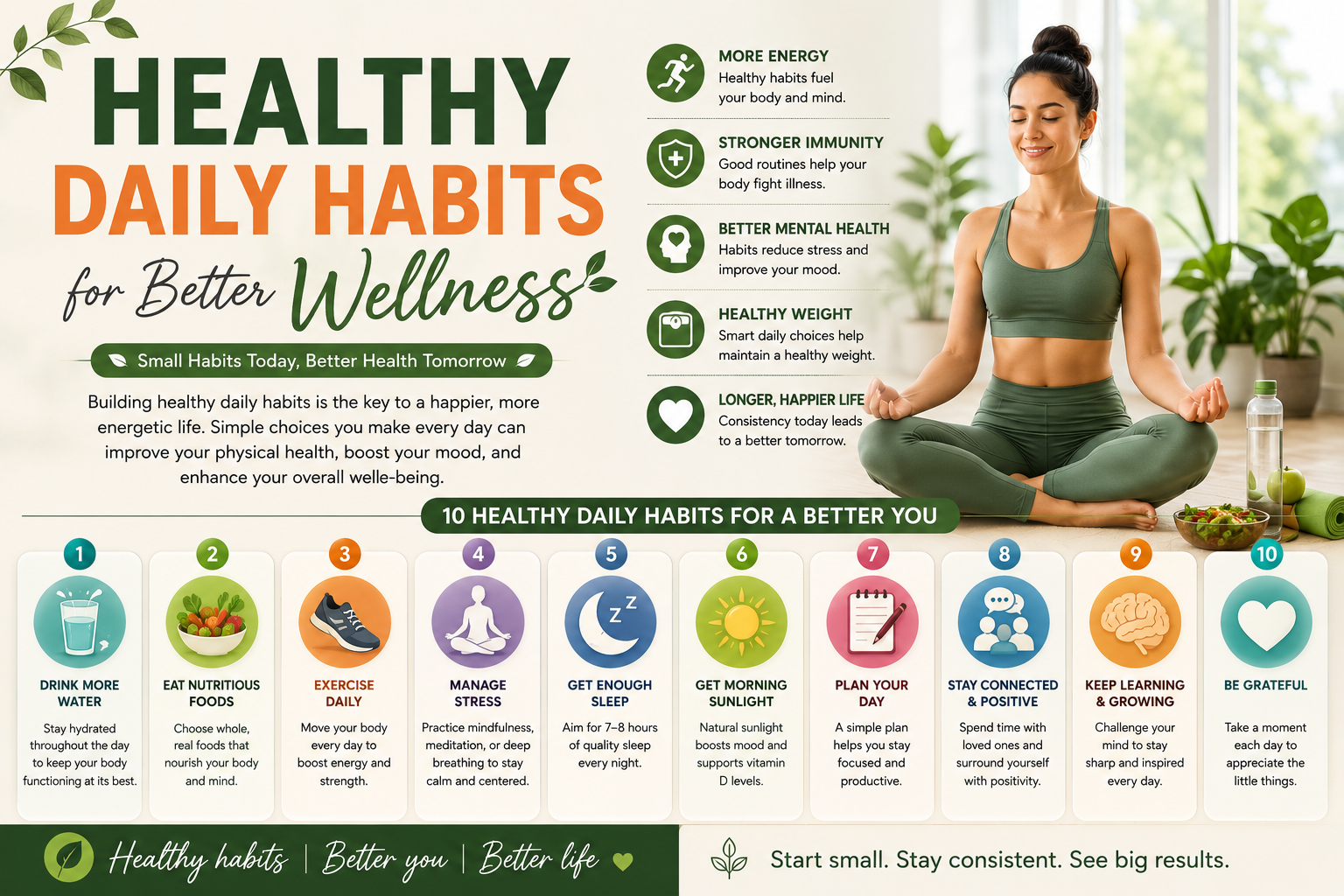
Wellness in 2026 feels different. We have more trackers, more advice, and more noise than ever before, yet the people who actually feel good aren’t following the most complicated plans. They’re the ones who have nailed the basics and do them consistently.
This isn’t about overhauling your entire life or buying into an expensive biohacking stack. Healthy Daily Habits for Better Wellness in 2026 comes down to small, repeatable choices that quietly add up — more steady energy in the afternoon, clearer focus, better sleep, and a body that feels more resilient when life gets stressful.
The big shift this year is away from all-or-nothing thinking. Extreme diets and punishing workout challenges are losing ground to something far more realistic: daily consistency, preventive health, and routines that support both body and mind at the same time. When your day is built around intentional actions, you stop white-knuckling your way through with willpower and start moving with rhythm.
Below is a practical breakdown of the habits that matter most right now, organized by how they actually fit into a day — morning, daytime, and evening. Each one is backed by current research and designed for real life, whether you work in an office, work from home, or are balancing family and everything else.
Why Healthy Daily Habits for Better Wellness in 2026 Matter More Than Ever
The Science of Small Habits and Long-Term Health
For a long time we treated wellness like it was built in big moments — a week-long detox, a 30-day challenge. What the research keeps showing is that long-term health is shaped by what you do most days, not occasionally. Your circadian rhythm, metabolism, stress hormones, and even your gut microbiome respond to repeated cues, not one-off efforts.
That’s why small habits punch above their weight. A consistent wake time steadies your hormones. A regular pattern of a balanced diet keeps blood sugar more stable. A short daily walk does more for cardiovascular health than one heroic workout on the weekend. Sleep well, and you naturally make better food choices. Eat well, and you have more energy to move. Move a little, and you sleep more deeply that night. It’s a compounding loop, and once it’s working in your favor, everything gets easier.
The Mind-Body Connection in Modern Wellness
Modern wellness no longer treats body and mind as separate departments. In 2026, we’re much clearer that mental health is physical health. Unmanaged chronic stress raises inflammation, throws off sleep hygiene, disrupts digestion, and weakens immunity. On the flip side, poor sleep and a nutrient-poor diet make anxiety, brain fog, and low mood far more likely.
So a good routine has to support the whole person. A habit that helps your body but drains you mentally won’t last. That’s why today’s most effective approaches pair traditional pillars like nutrition and exercise with daily practices for stress management, emotional resilience, and focus. The goal isn’t just to add years to your life, but to feel more present, calm, and clear inside the life you already have.
Morning Foundations: How You Start Your Day Shapes Your Wellness
Wake Up Consistently to Support Your Circadian Rhythm
If you only change one thing, make it your wake time. Your circadian rhythm — the internal 24-hour clock that runs everything from sleep quality to digestion and hormone release — loves predictability. Waking at roughly the same time each day, even on weekends, anchors that clock.
You don’t need a 5 a.m. alarm to get the benefit. Consistency matters more than being early. Pick a wake time you can actually stick to, get natural light in the first 30 to 60 minutes, and resist the snooze button loop. That early light tells your brain to turn down melatonin and bring cortisol up at the right time, which means more natural energy in the day and an easier time falling asleep at night. It’s the simplest form of sleep hygiene, and it’s free.
Hydrate Before You Caffeinate
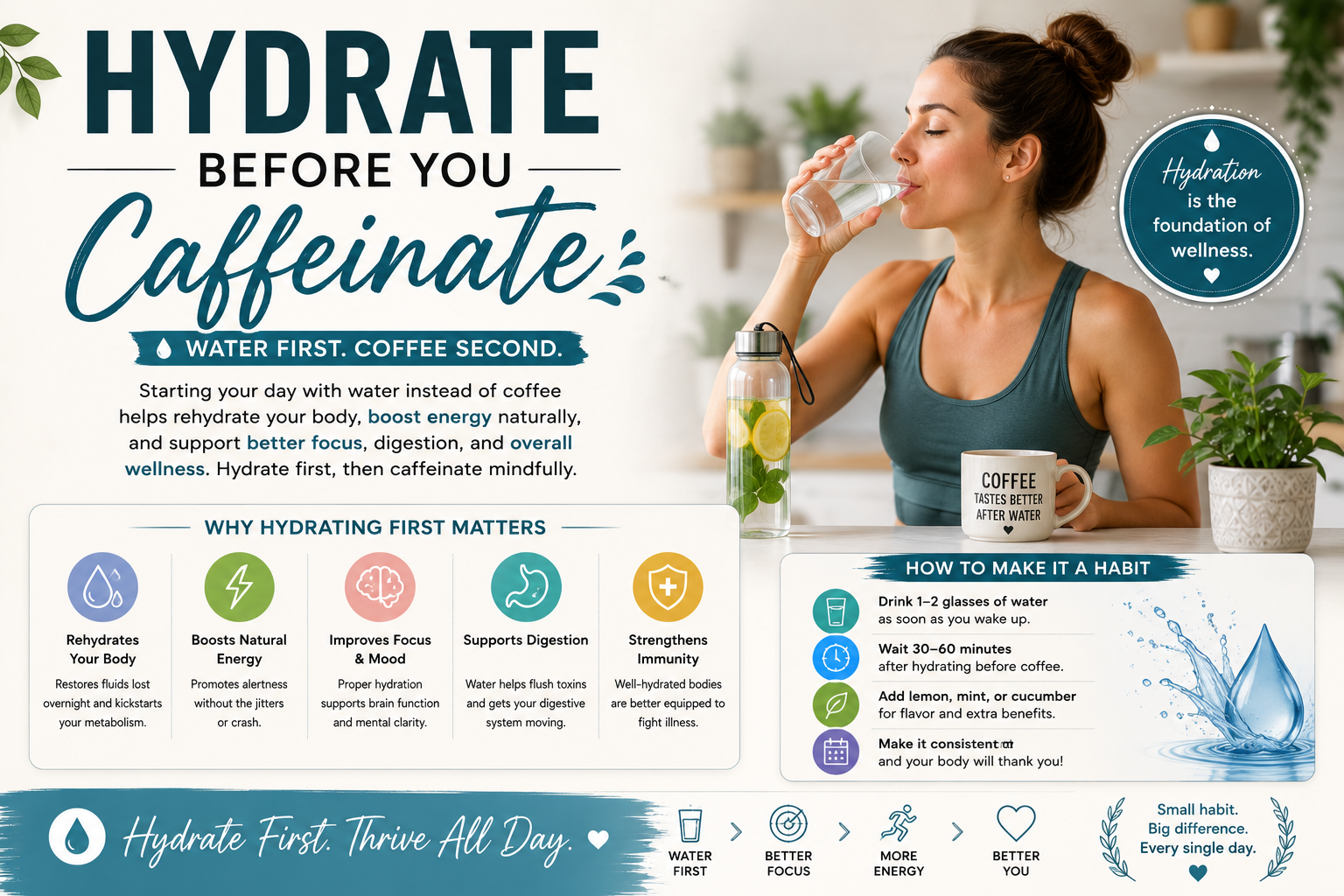
After seven or eight hours without water, you wake up mildly dehydrated, and even mild dehydration affects cognitive function, mood, and physical performance. One of the easiest wins for better wellness is drinking water before you reach for coffee.
Aim for 12 to 20 ounces right after waking. Some people add a pinch of sea salt or a squeeze of lemon to support electrolyte balance, especially if they train in the morning. Waiting 30 to 60 minutes after you wake before your first coffee also helps. It lets your natural cortisol peak do its work first, which can blunt that mid-morning crash and curb the urge for a second or third cup. You stay better hydrated and your energy feels steadier.
Move Your Body Early for Energy and Focus
You don’t need a full gym session before breakfast to shift your whole day. A little morning movement — ten minutes of stretching, a walk around the block, a few bodyweight movements — is enough to boost blood circulation, loosen stiff joints, and sharpen alertness.
Early physical activity also nudges up dopamine and serotonin, the neurochemicals tied to motivation and mood, and the effect lasts for hours. The 2026 approach leans toward mindful movement rather than punishment. Think mobility flows, brisk walking, or light yoga over forcing high-intensity work every single day. The best morning routine is the one you’ll repeat, which is what makes it a foundation for lasting wellness.
Nutrition and Energy: Fueling Your Body Intelligently
Build a Balanced Plate, Not a Perfect Diet
The most sustainable nutrition habit isn’t labeling foods as good or bad; it’s learning to build a balanced diet at each meal. That means pairing lean protein, healthy fats, fiber-rich carbs, and plenty of color from fruits and vegetables.
Protein at breakfast and lunch is especially useful for blood sugar control and staying full. It helps you avoid the dips and cravings that lead to late-night snacking. Healthy fats like avocado, olive oil, nuts, and oily fish support brain function and help lower inflammation, while fiber from whole foods nourishes your gut health — now understood as central to immunity, mood, and even sleep quality. You don’t need to track every macro. A simple check works: where’s my protein, where’s my fiber, where’s my color?
Practice Mindful Eating and Consistent Meal Timing
What you eat matters, but how you eat matters too. Mindful eating — slowing down, chewing properly, putting the phone down — improves digestion and helps you notice when you’re actually satisfied. It’s a quiet counter to the rushed, half-distracted meals that have become normal.
Timing helps as well. Eating at roughly similar times each day supports metabolic health by keeping hunger hormones in a steadier rhythm. Many clinicians now advise against heavy, late-night meals because they can interfere with sleep quality and overnight digestion. If you snack, make it intentional. Pair a carb with protein or fat — an apple with almond butter, for example — to keep blood sugar control even. Small adjustments, big difference over weeks.
Prioritize Gut Health for Whole-Body Wellness
Your gut is often called the second brain for good reason. The bacteria living in your digestive system influence immune system function, inflammation, and even anxiety levels. Supporting gut health has become non-negotiable for overall wellness.
The key is diversity. Aim for 25 to 30 different plant foods per week across fruits, vegetables, legumes, whole grains, nuts, and seeds. Add fermented foods like yogurt, kefir, kimchi, or sauerkraut a few times a week for natural probiotics, and don’t forget water — fiber needs fluid to do its job. When your gut is in better shape, everything else — energy, mood, immunity — tends to improve alongside it.
Movement and Mind: Daily Practices for Strength and Calm
Make Daily Physical Activity Non-Negotiable
You don’t have to live in the gym to be healthy. Research consistently shows that regular, moderate physical activity — walking, strength work, mobility — protects health more reliably than occasional all-out efforts. The real goal is to sit less and move more, every day.
A practical baseline for most people is 7,000 to 9,000 steps, plus two to three sessions of strength training weekly to maintain muscle and bone density. Muscle isn’t just aesthetic; it’s a metabolic organ that supports metabolic health and helps guard against age-related decline. Sprinkle in movement snacks — a two-minute stretch each hour, taking the stairs, an easy evening walk. This kind of daily exercise is sustainable, and it lowers risk for chronic conditions far better than an on-again, off-again approach.
Strengthen Your Mental Health with Daily Stress Management
Stress itself isn’t the enemy. Chronic, unmanaged stress is. That’s why stress management needs to be a daily habit, not something you save for a vacation. In practice, it’s about intentionally shifting your nervous system out of high alert.
It doesn’t have to be elaborate. Five minutes of deep breathing exercises, a short meditation practice, journaling, or time outside without your phone can reset your state. Even a physiological sigh — two quick inhales through the nose followed by a long exhale through the mouth — can lower heart rate and ease anxiety within a minute. Treating mental health like daily maintenance rather than an emergency fix improves focus, relationships, and physical health at the same time.
Protect Your Focus in a Distracted World
Your attention is a limited, valuable resource, and modern life is designed to fracture it. Constant pings, endless scrolling, and multitasking wear down cognitive function and leave you feeling wired but unaccomplished. Reclaiming focus is now a core wellness skill.
A few digital wellness boundaries help enormously. Try a 30-minute phone-free start to the morning, turn off non-essential notifications, and give email and social media set windows instead of letting them interrupt all day. Practice single-tasking — one task, full attention — and you’ll notice you finish faster and feel calmer. Even small moments of mindfulness during routine activities, like actually tasting your coffee or feeling warm water on your hands, train your brain to stay where your feet are.
Evening Rituals: Recovery and Restoration for Better Tomorrow
Create a Wind-Down Routine for Better Sleep Hygiene
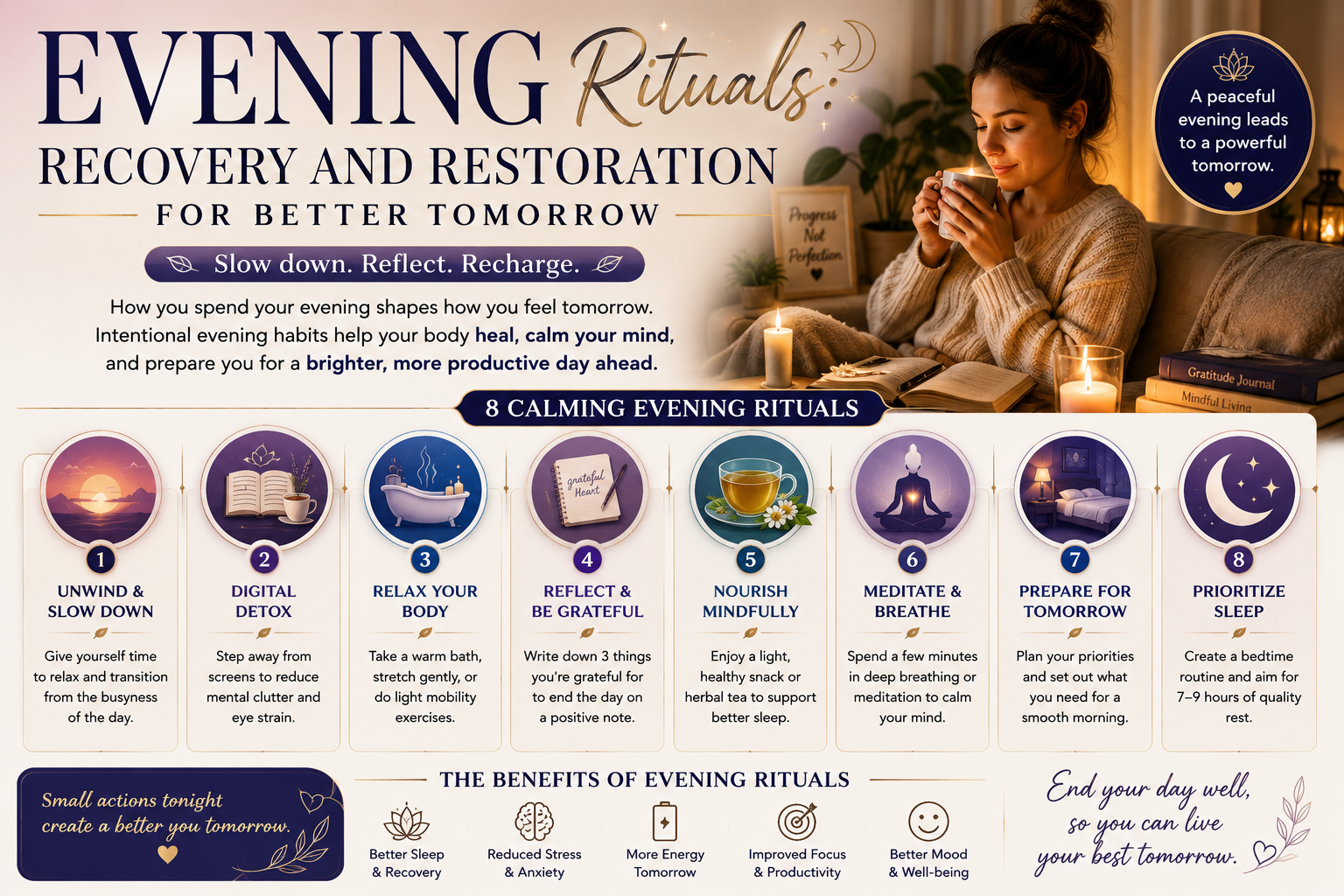
Mornings set the tone, but evenings decide how well you recover. Sleep hygiene underpins almost everything — immune system strength, emotional resilience, appetite regulation, and next-day decision making. In 2026, sleep isn’t an afterthought; it’s treated as the primary recovery tool.
Give yourself a 60-minute runway before bed. Dim the lights, switch off harsh overheads, and reduce screens so melatonin can rise naturally. Try to avoid caffeine after early afternoon and keep alcohol away from bedtime, since both hurt sleep quality even if they make you feel sleepy at first. Make the bedroom cool, dark, and quiet. When you protect sleep, you’re protecting the next day’s energy, patience, and choices.
Practice Gratitude and Reflection to Build Emotional Resilience
How you close the day shapes how you process stress and how quickly you fall asleep. A brief gratitude practice — just two or three minutes — is a powerful lever for mental health and emotional resilience. This isn’t about forced positivity. It’s about teaching your brain to notice what went right, not just what went wrong.
Some people jot down three specific things they’re grateful for; others reflect on one meaningful interaction. Pairing it with a quick brain dump — getting lingering worries onto paper — can reduce nighttime rumination and help you drift off faster. Done regularly, this quiet reflection builds a steadier, more optimistic mindset that makes external stressors easier to handle.
Strengthen Social Connection for Long-Term Wellness
Humans are wired for connection, and the data on loneliness is sobering — chronic isolation carries health risks comparable to smoking. That’s why social connection belongs alongside nutrition and exercise as a daily wellness habit.
It doesn’t require hours of socializing. A thoughtful text, a short call, sharing a meal without phones, or a genuine chat with a neighbor all count. Investing in healthy relationships and community gives you emotional support, lowers stress hormones, and is one of the strongest predictors of both happiness and longevity in long-term research. Wellness isn’t meant to be a solo project.
Conclusion
Real wellness doesn’t come from one perfect day. It comes from the average of your ordinary days. Healthy Daily Habits for Better Wellness in 2026 work because they’re simple, repeatable, and kind to the life you actually live. Anchor your circadian rhythm with a consistent wake time and morning light. Support your body with hydration, a balanced diet that prioritizes protein, fiber, and healthy fats, and daily physical activity that includes walking and strength training. Protect your mind with regular stress management, digital wellness boundaries, and moments of mindfulness. And prioritize recovery through strong sleep hygiene, evening reflection, and genuine social connection.
You don’t need to do all of this at once. Choose one or two habits that feel easy this week — water before coffee, a ten-minute walk after dinner, a phone-free wind-down — and let consistency do the heavy lifting. In a year full of quick fixes and complex protocols, the most effective move is often the simplest: keep the basics, do them daily, and let them compound.
Frequently Asked Questions
What are the most important Healthy Daily Habits for Better Wellness in 2026?
The foundation hasn’t changed, even if the trends have. Consistent wake and sleep times to support circadian rhythm, daily hydration, regular physical activity with walking and strength training, a balanced diet rich in whole foods and plants, and a daily practice for stress management to protect mental health. Get those five steady and most other areas — energy, focus, immunity — improve with them.
How long does it take to form a new healthy habit?
Longer than the old 21-day myth. Most research points to around 60 to 70 days for a new behavior to feel automatic, depending on complexity and consistency. The best strategy is to start tiny — two minutes of meditation practice or a five-minute walk — and link it to something you already do. That tiny, repeatable version is far more likely to stick than an ambitious plan you only do occasionally.
Can Healthy Daily Habits for Better Wellness improve sleep without supplements?
Yes, and for most people they work better long-term than supplements. Strong sleep hygiene — same wake time, morning sunlight, limiting caffeine after early afternoon, a cool, dark bedroom, and a screen-free wind-down — directly regulates melatonin and cortisol. Those behavioral cues are what your body uses to time sleep, so when they’re consistent, sleep quality usually improves noticeably.
How do I stay consistent with healthy habits when I have a busy schedule?
Shrink the habit until it fits your busiest day. If you can’t do an hour workout, do ten minutes of mindful movement. If a perfect balanced diet isn’t realistic, aim to add protein and vegetables where you can. The 2026 mindset is flexible: it’s better to do 50% of the habit consistently than 100% once in a while. Consistency beats intensity every time.
Are Healthy Daily Habits for Better Wellness different for mental and physical health?
They’re interconnected, not separate categories. Habits that support physical health — daily exercise, a nutrient-dense balanced diet, quality sleep — directly improve mental health by supporting brain chemistry and mood regulation. Likewise, habits for mental health like gratitude practice, deep breathing exercises, and social connection lower inflammation and strengthen immune system function. The most effective routines support both at once.
