

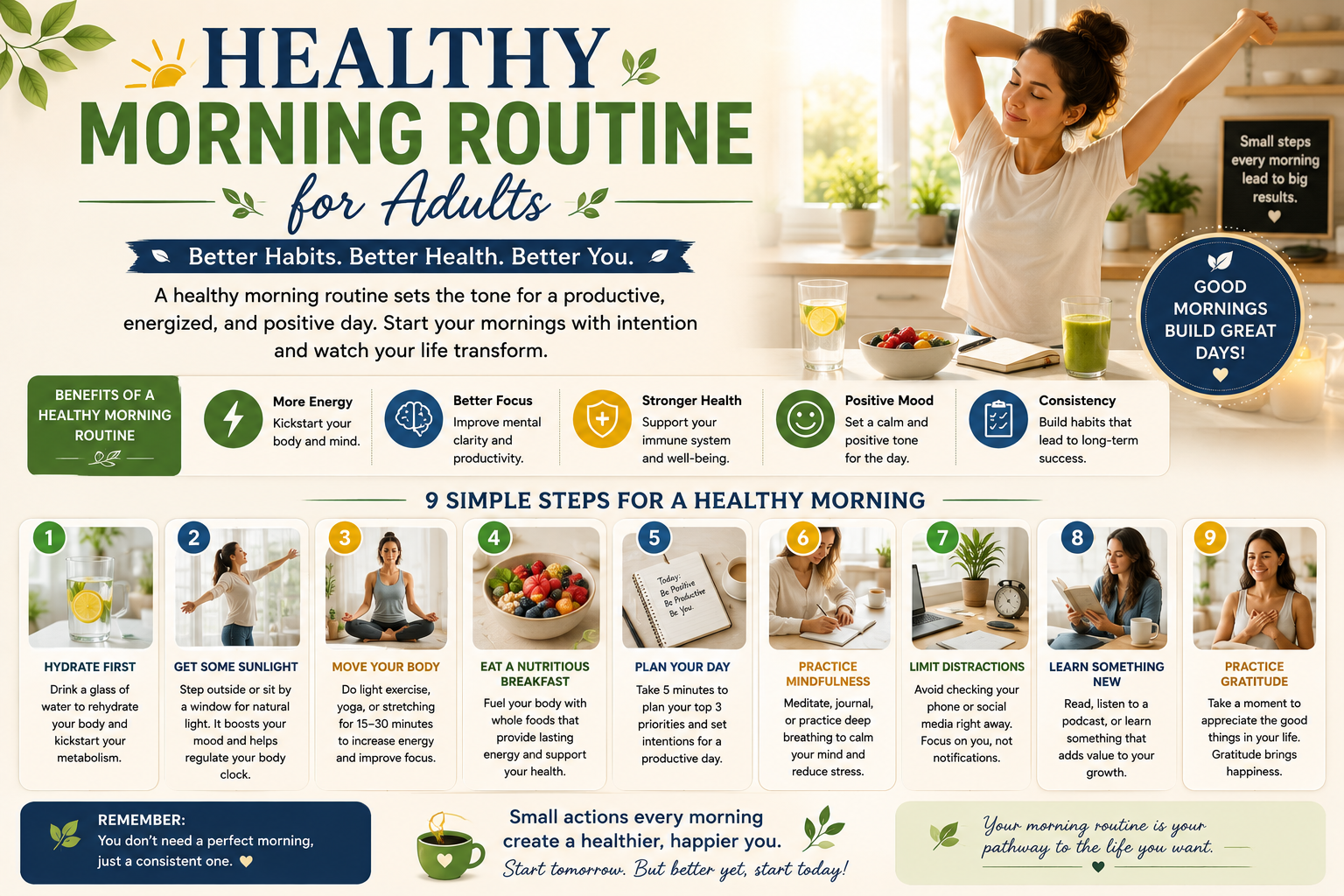
The way you start healthy morning Routine for adults tends to decide how the rest of your day feels. Afternoon energy, focus at work, patience at dinner — it usually traces back to what happened in that first hour after waking.
A healthy morning routine for adults isn’t about getting up at 5 a.m., taking an ice bath, and journaling for an hour while the world is still dark. It’s about creating a calm, intentional rhythm that supports you instead of draining you before you’ve even had a chance to wake up properly.
Most of us know the other version too well. Snooze three times, grab the phone, scroll through headlines and emails with one eye open, coffee on an empty stomach, out the door already feeling behind. That rush spikes stress hormones, unsettles blood sugar, and puts you in catch-up mode until bedtime.
A solid morning routine flips that. It anchors your circadian rhythm, steadies your nervous system, and gives you a few small wins early, which add up to better mental health, steadier physical health, and clearer thinking. In 2026, the routines that actually stick aren’t complicated. They’re built on the same fundamentals science keeps coming back to: light, water, movement, nourishment, and protected focus. This guide shows you how to piece those together in a way that fits a real schedule, whether you have 20 minutes or a full hour.
Why a Healthy Morning Routine for Adults Changes Your Whole Day
Your Morning Sets Your Biology for the Next 24 Hours
Your body runs on an internal 24-hour clock known as your circadian rhythm. It influences when you feel sleepy and alert, when you digest food most efficiently, and when hormones like cortisol and melatonin rise and fall. And the strongest reset button for that clock is morning behavior.
When you expose yourself to natural light early, keep a fairly regular wake time, and move a little, you’re giving your biology a clear time signal. That light tells your brain to lower melatonin and bring daytime alertness online. Hydration first thing helps reverse overnight fluid loss, and gentle movement gets blood circulation going. Put together, those cues lead to better sleep quality that night and more even energy during the day. Skip them consistently, and your system stays groggy, misaligned, and more dependent on caffeine to get going.
The Link Between Mornings, Stress, and Mental Health
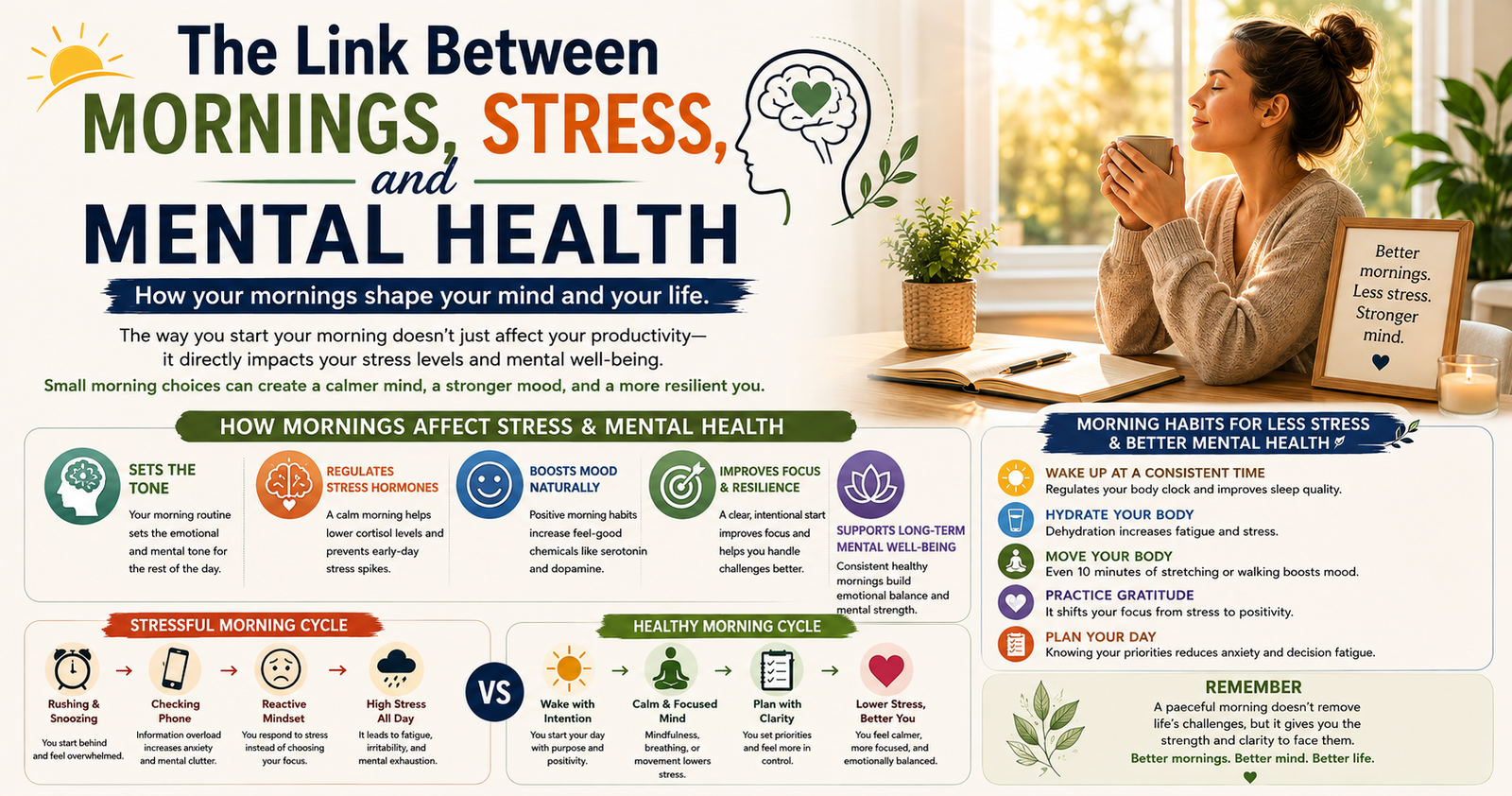
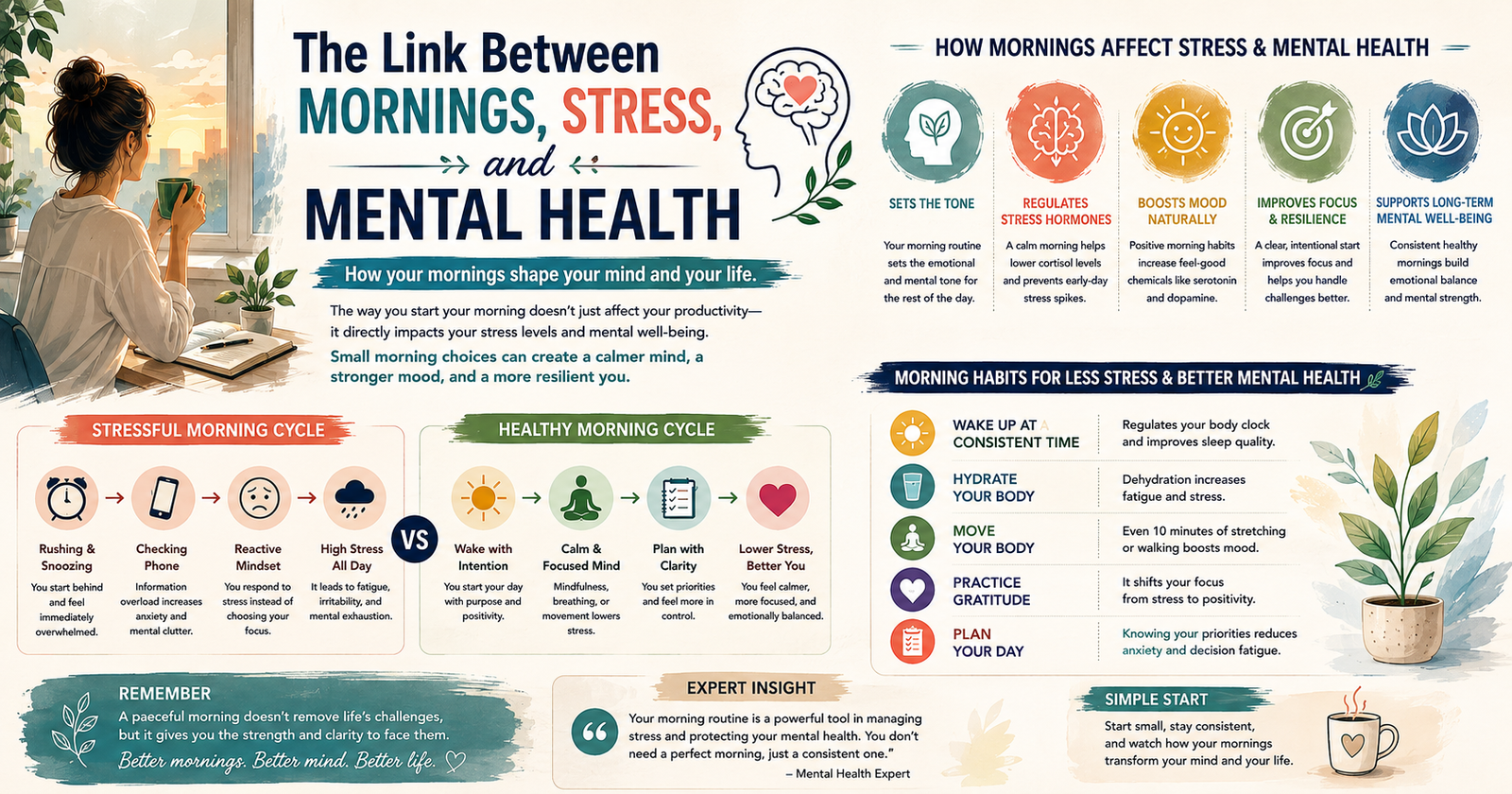
The first few minutes also set your stress baseline. If you wake up and immediately dive into inbox and headlines, you start in reactive mode. Cortisol jumps, breathing gets shallow, your brain switches to threat-scanning. Do that daily, and you train your nervous system to live in low-grade alert.
A more supportive routine does the opposite. Calm, proactive actions like mindfulness, slow deep breathing exercises, and unhurried hydration lower baseline anxiety and build emotional resilience. You’re not avoiding stress — you’re giving yourself a buffer so you can meet it without spiraling. Adults who keep a simple, structured morning pattern tend to report less burnout, better cognitive function, and steadier mood. It’s not just productivity advice. It’s everyday stress management.
The Core Pillars of a Healthy Morning Routine for Adults
Wake Up Consistently Without the Snooze Trap
Consistency matters more than an early alarm. Waking within roughly the same window each day, even on weekends, stabilizes your circadian rhythm and makes both falling asleep and waking up feel less like a fight.
Snoozing works against that. Those fragmented nine-minute chunks aren’t restorative; they usually leave you groggier. A better setup is simple: put your alarm out of arm’s reach, consider a sunrise-mimicking light alarm, and decide the night before that feet hit the floor within 30 seconds of the sound. That one choice makes everything else in your morning much easier to follow through on.
Let Natural Light In First Thing
If there’s one free, high-impact habit, it’s light. Aim to get outside or right next to a bright window for five to ten minutes within the first hour of waking. That exposure suppresses leftover melatonin, helps cortisol rise at the right time, and reinforces solid sleep hygiene later.
For dark winter mornings or very early shifts, a daylight lamp can be a useful stand-in. Open the blinds as soon as you get up, step onto a balcony, take your water outside. It’s a small action that reliably improves alertness, mood, and energy levels — more so than another cup of coffee — and it works in any season.
Hydrate Before You Caffeinate
After seven to eight hours without fluids, you wake up mildly dehydrated. Since your brain is largely water, even slight dehydration dulls focus, memory, and mood. That’s why drinking water before anything else has become a staple.
Most adults do well with 12 to 20 ounces right away. Some add a pinch of mineral salt or a squeeze of lemon to support electrolyte balance, particularly if they exercise early or sweat heavily at night. Waiting 45 to 90 minutes before coffee can also help. It lets your natural cortisol awakening response peak first, so caffeine feels smoother and you’re less likely to crash mid-morning. It’s a tiny delay that supports both hydration and steadier energy.
Movement and Mindfulness: Energizing Your Body and Brain
Start with Gentle Physical Activity
You don’t need an intense workout to benefit from morning movement. In fact, a sustainable routine for adults usually does better with gentle, consistent physical activity that simply gets blood moving — mobility work, a short stretch sequence, a brisk ten-minute walk, or a few bodyweight movements.
That light activity lubricates joints, increases blood circulation to the brain, and triggers a modest bump in dopamine and serotonin that carries into the next few hours. Choose mindful movement you actually like — yoga, walking, dancing in the kitchen, light strength work — rather than something you dread. When movement feels like a gift instead of punishment, you’ll repeat it, which is what turns it into a true habit.
Practice Mindfulness and Deep Breathing for Mental Clarity
Your mind benefits from a warm-up too. Five minutes of mindfulness or deep breathing exercises early can meaningfully improve focus and take the edge off anxiety for the rest of the day. This isn’t about emptying your head. It’s about practicing how you direct attention.
Try box breathing — inhale for four, hold for four, exhale for four, hold for four — or a simple meditation practice where you follow your breath and gently return when your mind wanders. Even two minutes counts. People who keep a brief practice in the morning often notice better stress management, less snap reactivity in tense conversations, and clearer mental clarity when it’s time to work.
Set Intentions Instead of a To-Do List
Long to-do lists first thing can create pressure before the day has started. A calmer alternative is to set one to three intentions. Ask yourself: what would make today feel like a win? What’s the one important thing I want to move forward? How do I want to feel tonight?
This kind of intentional living shifts you from busy to purposeful. You can jot the intentions in a notebook or say them out loud while you sip water. A quick glance at your calendar at the same time helps avoid surprises. It takes two minutes and cuts down on decision fatigue and that scattered feeling later on.
Nourishment and Focus: Fueling Your Day the Right Way
Eat a Balanced Breakfast for Stable Energy
Skipping breakfast works for some people, but many adults feel and function better with something nourishing in the morning. The aim isn’t a perfect meal; it’s stability. A combination of lean protein, healthy fats, and fiber keeps blood sugar steadier and helps you stay full and focused until lunch.
Greek yogurt with berries and chia, eggs with avocado and whole grain toast, or oatmeal boosted with protein and nuts are all solid examples. Morning protein is especially helpful for satiety and for preserving lean muscle, which underpins metabolic health. Starting with only sugar or refined carbs often leads to a spike and dip that drags down both energy and mood. A balanced plate keeps your morning genuinely nourishing.
Protect Your Focus with a Digital Detox Window
Nothing unravels a calm start faster than immediate scrolling. Emails, news alerts, and social feeds pull you into other people’s priorities and put your brain in reactive mode before you’ve had a moment for yourself.
Building a short digital detox window — 30 to 60 minutes after waking — protects that early calm. Keep the phone on Do Not Disturb, charge it outside the bedroom if you can, and consider a basic alarm clock instead of your phone. Use that first hour for light, water, movement, and intention before the outside world gets access. It’s one of the most effective forms of digital wellness, and most people notice they feel more centered and less anxious almost immediately.
Create a Simple Skincare and Self-Care Ritual
Morning self-care isn’t vanity. It’s a cue that you matter. A brief skincare routine or grooming ritual can be grounding — wash your face, moisturize with SPF, brush your teeth with attention, take a minute to get dressed in a way that makes you feel ready.
That small investment reinforces self-respect and helps your brain transition from sleep to wakefulness. For a lot of adults, pairing it with something like making the bed creates a quiet sense of order and accomplishment that carries forward. Your routine doesn’t need to be elaborate to work; it just needs to leave you feeling a bit more put-together and prepared.
Building a Sustainable Routine That Actually Lasts
Start Small and Stack Your Habits
The fastest way to burn out is to overhaul everything at once. A routine that lasts is built gradually through habit stacking — linking a new action to something you already do without thinking.
After you turn off the alarm, drink water. After you drink water, open the blinds. After you open the blinds, stretch for two minutes. Those tiny chains reduce friction because you don’t have to rely on motivation to remember. Begin with two or three habits that take less than ten minutes total, repeat them for a week, then layer in another. When it comes to wellness, consistency beats intensity every time.
Customize Your Routine for Your Chronotype and Schedule
Not everyone is naturally a morning person, and fighting your biology rarely helps. Your chronotype — whether you skew more lark or owl — shapes what a realistic morning looks like for you.
If you only have 20 minutes before you need to get out the door, prioritize the essentials: light, water, a minute of breathing, and a quick intention. If you have closer to an hour, you might add movement, a balanced breakfast, and a few lines of journaling. Parents of young kids often need to split their routine into micro-moments between caregiving tasks. The best routine isn’t the most impressive one on social media; it’s the one you can actually repeat tomorrow.
Prepare the Night Before for a Smoother Morning
A good morning often starts the evening before. Without decent sleep, no habit feels good, which is why sleep hygiene is part of the morning conversation. Aim for a fairly consistent bedtime, dim the lights in the hour before sleep, and keep heavy meals, alcohol, and late-night scrolling to a minimum.
A little prep helps too. Lay out workout clothes, fill a water bottle, decide on breakfast, and note your top three priorities for the next day. That reduces morning decision fatigue and makes follow-through far more likely. When the evening is calmer, mornings tend to be calmer too.
Conclusion
A healthy morning routine for adults isn’t about perfection or turning your life into a productivity performance. It’s about building a steady, supportive start so the rest of the day feels a little easier, calmer, and more your own.
Anchor your circadian rhythm with a consistent wake time and early light, prioritize hydration before caffeine, move gently, eat in a way that balances blood sugar, protect your attention with a short digital detox, and weave in brief practices for mindfulness and self-care. Those fundamentals, repeated daily, create momentum that lasts well beyond breakfast.
You don’t have to do it all at once. Pick two habits that feel almost too easy — water right after waking and five minutes of natural light, for example — and practice them for the next seven days. Once they feel automatic, add one more. Over weeks and months, those small choices compound into more stable energy levels, better sleep quality, improved mental health, and greater emotional resilience. Mornings shape days, and days shape your life. Start small, stay consistent, and let your routine become the quiet foundation that holds up everything else you want to build.
Frequently Asked Questions
What is the best healthy morning routine for adults with limited time?
When time is tight, keep it to the highest-leverage basics. Drink 12 to 20 ounces of water right after waking, get outside or near a bright window for five minutes, do two minutes of deep breathing exercises or light stretching, and name one intention for the day. That short sequence still covers hydration, light exposure for your circadian rhythm, movement, and mindset without needing special equipment or a very early alarm.
Should a healthy morning routine for adults include breakfast?
For most adults, a balanced breakfast helps with blood sugar control, focus, and energy levels. A mix of lean protein, healthy fats, and fiber — like eggs with vegetables and avocado or Greek yogurt with berries and nuts — keeps you fuller longer. If you practice intermittent fasting and genuinely feel good skipping breakfast, make sure your first meal later in the day is nutrient-dense and that you stay on top of fluids in the morning.
How long does it take to build a healthy morning routine for adults?
It usually takes longer than the popular 21-day claim. Research points to an average of 60 to 70 days for a new behavior to feel automatic, depending on complexity. The most reliable approach is to start tiny, use habit stacking to link new actions to existing ones, and prioritize showing up daily over doing it perfectly. A short routine done every day beats a long, ideal routine done twice a week.
Can a healthy morning routine for adults help with anxiety and stress?
Yes, it can make a noticeable difference. A calm, proactive start lowers your stress baseline for the whole day. Practices like mindfulness, deep breathing exercises, gentle physical activity, and a digital detox window help regulate cortisol and improve emotional resilience. People who keep a regular morning pattern often report less anxiety, clearer mental clarity, and better stress management as the day unfolds.
What should I avoid in a healthy morning routine for adults?
It helps to avoid a few common traps: immediately reaching for your phone, hitting snooze over and over, having coffee while still dehydrated and on an empty stomach, and jumping straight into intense exercise or stressful news without any warm-up. Those patterns spike stress, disrupt sleep hygiene, and drain cognitive function early. Aim for grounding and energizing, not rushed and reactive.
Read more: 10 Healthy Lifestyle Habits That Can Transform Your Life in 2026
